
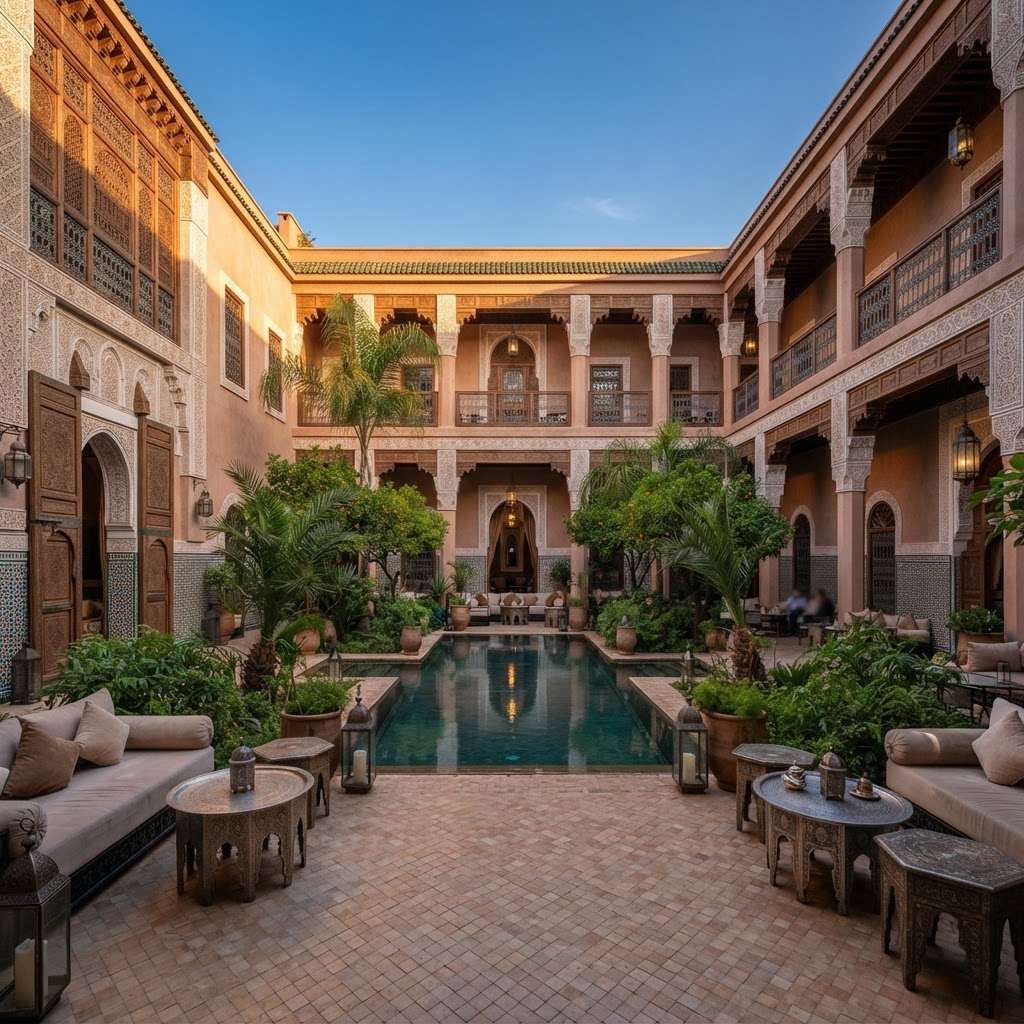
Marrakech stands as Morocco's premier tourism destination, drawing in over 3 million tourists annually, a testament to its vibrant culture and year-round appeal. The city is experiencing a remarkable surge in hotel investments, with luxury hotel development projected to grow by 25% from 2020 to 2024. For investors, well-positioned properties in Marrakech offer an attractive average ROI range of 8-12%. At Stay4Hospitality, we leverage our extensive expertise in Moroccan hospitality transactions to guide you through the intricate process of buying hotels in Marrakech. This comprehensive guide offers a deep dive into the local market analysis, a step-by-step hotel acquisition process, legal frameworks, financing options, due diligence, and post-purchase strategies. It caters to international investors, hospitality groups, and individual buyers eager to explore Marrakech hotel opportunities. By following this guide, you'll gain the insights needed to navigate the Marrakech hotel acquisition process from the initial search to successful operation, ensuring informed decisions in this dynamic market.
Key Takeaways
- Marrakech's hotel market offers diverse opportunities from traditional riads to large-scale resorts, each catering to distinct tourist demographics.
- Foreign investors must navigate specific Moroccan property laws, including the need for local partnerships for certain property types.
- Due diligence should include water rights verification, zoning checks, and historical preservation status for medina properties.
- Hotel operating costs in Marrakech typically range between 35-45% of revenue, with staffing being the largest expense component.
- Successful hotel acquisitions often involve adapting traditional properties to meet modern expectations while preserving authentic character.
- Off-season occupancy rates still maintain a baseline of 50-60% due to Marrakech's year-round event calendar and mild winter climate.
- Investors should budget 15-25% above purchase price for necessary renovations and rebranding before reopening.
Understanding Marrakech's Hotel Market Dynamics
Understanding Marrakech's Hotel Market Dynamics
Marrakech's hotel market is a vibrant blend of traditional Moroccan charm and modern hospitality, offering diverse opportunities for investors. The city attracts a mix of leisure travelers, cultural explorers, and business visitors, creating demand for various property types.
Key Property Types in Marrakech
- Riads: Converted traditional Moroccan homes with courtyards, often 5-15 rooms. Prices range from €200,000 for smaller properties to over €2 million for premium restorations in the Medina.
- Boutique Hotels: Typically 20-50 rooms, blending local aesthetics with modern comforts. Prime locations (e.g., Gueliz, Hivernage) command €500,000–€3 million.
- Resorts: Larger properties (50+ rooms) in Palmeraie or outskirts, with land for pools/spas. Investment starts at €2 million, scaling with acreage and amenities.
Tourism Arrival Statistics (2022-2024)
Marrakech welcomed approximately 3 million tourists in 2022, with projections suggesting a growth to 3.5 million by 2024. European travelers, particularly from France, the UK, and Germany, make up 60-70% of visitors, with a notable increase in tourists from the Middle East and North America.
Average Occupancy Rates by Quarter
- High Season (October–April): Occupancy rates soar to 80-95% due to mild weather and cultural festivals.
- Low Season (July–August): Rates drop to 40-60% as extreme heat deters some travelers.
- Shoulder Seasons (May, September): Occupancy stabilizes around 65-75%, benefiting from pleasant weather and fewer crowds.
Price Per Room Benchmarks by District
- Medina: Budget riads can be acquired for €200,000–€500,000, while luxury options range from €1 million to over €2 million.
- Hivernage: Mid-range hotels are priced between €500,000 and €1.5 million, with luxury properties reaching €3 million.
- Palmeraie: Resorts start at €2 million, with high-end options exceeding €5 million, depending on the scale and amenities.
Recent Hotel Transactions
In 2023, a boutique hotel in Gueliz with 25 rooms was acquired for €1.2 million, reflecting the area's growing appeal among investors. Meanwhile, a luxury riad in Medina was sold for €1.8 million, underscoring the premium attached to historic properties.
Competitive Landscape
- Medina: Saturated with riads; differentiation requires unique design or niche themes (e.g., wellness, culinary).
- Newer Districts: Gueliz and Semlalia offer lower competition but require modern positioning.
- Resort Zones: Palmeraie appeals to luxury seekers but demands significant upkeep budgets (€50,000–€100,000 annually for landscaping/pools).
Tip: Analyze foot traffic and nearby attractions—proximity to Jemaa el-Fnaa or Majorelle Garden can justify premium pricing.
For further insights and expert advice, explore our Complete Guide To Selling A Hotel and related resources on hospitality property investment.
Step-by-Step Process for Acquiring a Hotel in Marrakech
Initial Search & Shortlisting
Begin your hotel acquisition journey by defining clear investment criteria: property size, star rating, location (Medina, Hivernage, Palmeraie), budget range, and target ROI. Engage a licensed Moroccan real estate agent (agent immobilier agréé) who specialises in hospitality properties and holds a valid professional card issued by the Ministry of Tourism.
Timeline: 2–4 weeks
Key tasks:
- Buyer: Compile a shortlist of 5–8 properties that match investment criteria; request preliminary financial statements (last 3 years' trading accounts, occupancy rates, RevPAR data)
- Agent: Provide property dossiers including title deed summaries (résumé du titre foncier), current zoning classification, and any outstanding municipal charges
- Checklist items: Verify agent credentials; confirm each property holds a valid tourism operating licence (licence d'exploitation touristique); cross-reference listings against the National Tourism Register
Property Inspection & Valuation
Conduct thorough on-site inspections with a qualified surveyor (géomètre-expert) and hospitality consultant. In heritage-sensitive zones—particularly the UNESCO-protected Medina—engage an architect approved by the Agence Urbaine de Marrakech to assess structural compliance with conservation regulations.
Timeline: 3–5 weeks
Key tasks:
- Buyer: Commission independent property valuation (typically costs 15,000–25,000 MAD); review building permits (permis de construire) and any renovation approvals
- Surveyor: Produce detailed structural report, identifying necessary repairs and estimating refurbishment costs
- Hospitality consultant: Analyse trading performance, benchmark against comparable properties, forecast revenue potential
- Checklist items: Verify zoning compliance for hotel use; confirm fire safety certificates (attestation de conformité incendie) are current; inspect water and electricity supply contracts; review staff employment contracts and social security compliance
Read the full Marrakech Hotel Zoning Laws and Permits guide for detailed zoning verification steps.
Offer & Negotiation
Submit a formal written offer (offre d'achat) through your agent, typically 10–15% below the asking price for negotiation room. Moroccan sellers expect multiple rounds of negotiation; patience and cultural sensitivity are essential.
Timeline: 2–3 weeks
Key tasks:
- Buyer: Prepare offer letter specifying price, payment terms, conditions precedent (satisfactory due diligence, financing approval), and proposed completion date
- Lawyer: Draft preliminary sale agreement (promesse de vente or compromis de vente) once verbal agreement is reached
- Checklist items: Agree deposit amount (typically 10% of purchase price, held in escrow); establish due diligence period (usually 45–60 days); confirm which party pays transfer taxes (typically 6–7% of purchase price, negotiable)
Legal Due Diligence
This critical phase requires a Moroccan notaire (notary public) and specialist hospitality lawyer. Due diligence typically takes 45–60 days and uncovers any legal encumbrances, outstanding debts, or regulatory non-compliance.
Timeline: 6–8 weeks
Key tasks:
- Notary: Conduct title search (recherche de titre) at the Land Registry (Conservation Foncière); verify seller's ownership and identify any mortgages, liens, or third-party rights
- Lawyer: Review all tourism licences and permits; verify compliance with labour laws; examine supplier contracts, lease agreements, and franchise arrangements (if applicable)
- Accountant: Audit financial statements; verify tax compliance (corporate tax, VAT, local taxes); identify any outstanding liabilities
- Checklist items: Obtain certificat de propriété (certificate of ownership); secure certificat de non-hypothèque (certificate confirming no mortgages); verify planning permissions for any extensions or modifications; confirm environmental compliance certificates; review insurance policies
Financing Approval
If requiring bank financing, Moroccan lenders typically finance 50–70% of the purchase price for foreign buyers, requiring substantial equity contribution.
Timeline: 4–6 weeks (concurrent with due diligence)
Key tasks:
- Buyer: Submit loan application with business plan, financial projections, and personal financial statements to 2–3 banks
- Bank: Conduct independent property valuation; assess creditworthiness; issue formal loan offer (offre de prêt)
- Checklist items: Provide proof of equity funds (bank statements, asset declarations); obtain pre-approval letter before signing binding purchase agreement; review loan terms (interest rates typically 4.5–6.5% for commercial property)
Closing & Transfer
The final transaction occurs at the notary's office, where all parties sign the acte de vente (deed of sale) and ownership transfers.
Timeline: 1–2 weeks after due diligence completion
Key tasks:
- Notary: Prepare final deed of sale; calculate and collect transfer taxes (droits d'enregistrement, approximately 4% of purchase price plus notary fees of 1–1.5%); register new ownership at Land Registry
- Buyer: Transfer remaining purchase funds; receive keys and all property documentation
- Lawyer: Ensure transfer of all licences, permits, and contracts; notify relevant authorities of ownership change
- Checklist items: Obtain updated titre foncier (land title) in your name; transfer utility accounts; notify Ministry of Tourism of ownership change; update tourism operating licence; arrange property insurance from completion date; conduct handover inspection with inventory
Total acquisition timeline: 4–6 months from initial offer to completion, though complex transactions in the Medina may extend to 8 months due to heritage approvals.
Financial Considerations and Funding Options
Typical Acquisition Costs Breakdown
When buying hotels in Marrakech, understanding the complete cost structure is essential for accurate budgeting. Beyond the purchase price, expect to allocate 6–10% of the transaction value for acquisition costs. Notary fees typically range from 1.5–2.5% of the property value, while registration taxes add another 2.5–3%. Agency commissions usually fall between 2–3%, though these are often negotiable on larger transactions. Legal fees for due diligence and contract review typically cost €5,000–€15,000 depending on property complexity. Factor in property survey costs (€2,000–€5,000), translation services for legal documents (€1,500–€3,000), and initial licensing fees which can reach €3,000–€8,000 for hotel-specific permits.
Moroccan Bank Financing for Foreign Buyers
Moroccan commercial banks offer financing for hotel acquisitions in Marrakech, though terms for foreign investors differ significantly from domestic borrowers. Major institutions including Attijariwafa Bank, BMCE Bank of Africa, and Banque Populaire provide commercial property loans with interest rates ranging from 5.5–7.5% for foreign nationals. Loan terms typically extend 10–15 years for established properties, with amortization schedules structured to match seasonal revenue patterns. Moroccan banks require comprehensive business plans demonstrating proven hospitality experience and detailed financial projections. Processing times average 8–12 weeks from application to approval, with banks conducting thorough property valuations and market feasibility studies before commitment.
International Lender Options
Foreign investors frequently secure financing through international lenders familiar with Moroccan hospitality markets. European banks with North African operations, including Société Générale and BNP Paribas, offer cross-border commercial mortgages with interest rates from 4.5–6.5%, often more competitive than local options. International development finance institutions such as the European Bank for Reconstruction and Development (EBRD) provide structured financing for tourism projects meeting sustainability criteria. Private equity firms and hospitality-focused investment funds offer alternative financing structures, including mezzanine debt and joint venture arrangements, particularly for properties valued above €3 million.
Equity Requirements and LTV Ratios
Foreign investors should prepare for down payments of 30–40% of the purchase price when acquiring Marrakech hotels. Moroccan banks typically offer loan-to-value (LTV) ratios of 60–70% for non-resident buyers, compared to 70–80% for Moroccan nationals. Properties requiring significant renovation may face lower LTV ratios of 50–60%, with banks requiring detailed refurbishment plans and contractor quotes. Established hotels with proven revenue histories (minimum 3 years of audited accounts) qualify for more favorable terms. Lenders assess debt service coverage ratios (DSCR) carefully, typically requiring minimum ratios of 1.25–1.35 to ensure cash flow adequately covers loan repayments alongside operational expenses.
Working Capital Reserves
Successful Marrakech hotel investment requires substantial working capital beyond acquisition and financing costs. Budget 6–12 months of operating expenses as reserves, accounting for Marrakech's pronounced seasonality where winter months generate 60–70% of annual revenue. Essential reserves include staff salaries during low season (€15,000–€40,000 monthly depending on property size), utility costs, insurance premiums, and marketing expenditure. Properties undergoing repositioning or renovation need additional capital of 15–25% of project costs for unforeseen expenses and timeline extensions. Maintain liquidity for license renewals, tax obligations, and emergency repairs—undercapitalized acquisitions frequently struggle during the quieter summer months when occupancy drops to 30–45%.
Legal Framework and Compliance Requirements
Legal Framework and Compliance Requirements
Navigating the legal landscape when buying hotels in Marrakech requires a thorough understanding of Moroccan laws and regulations specific to hospitality properties. This section outlines the essential compliance requirements, providing a step-by-step guide to ensure a smooth acquisition process.
Foreign Ownership Regulations
In Morocco, foreign investors can own property, including hotels, with few restrictions. However, it is crucial to understand the specific regulations that apply to hospitality properties.
- Ownership Law: Unlike residential real estate, hotel ownership is often subject to commercial property laws, which can affect financing and operational permissions.
- Government Department: The Ministry of Economy and Finance oversees foreign investment regulations.
- Timeline: Typically, the process for registering foreign ownership takes 4-6 weeks.
- Documentation Needed: Passport copy, proof of funds, and a detailed business plan.
Required Licenses and Permits
Operating a hotel in Marrakech necessitates obtaining several licenses and permits to comply with local regulations.
- Licensing Authority: The Regional Investment Center (CRI) is the primary body for issuing commercial licenses.
- Types of Licenses:
- Commercial License: Required for all business operations, processing time is around 2-3 weeks.
- Tourism License: Specific to hospitality properties, this license ensures compliance with tourism standards, taking approximately 3-4 weeks.
- Documentation Needed: Business registration documents, property lease or ownership deed, and tax registration certificate.
Title Verification Process
Ensuring clear and legal ownership of the hotel property is a critical step in the acquisition process.
- Verification Authority: The Land Registry Office (Conservation Foncière) manages title verification.
- Steps Involved:
- Title Search: Conducted to confirm the legal owner and any encumbrances, typically completed within 1-2 weeks.
- Notary Services: A local notary must authenticate the transaction, which can take an additional 1-2 weeks.
- Processing Fees: Expect to pay around 1% of the property's value in notary and registration fees.
Tax Registration Steps
Registering for tax purposes is mandatory for operating a hotel in Marrakech, impacting both local and national tax obligations.
- Tax Authority: The Directorate General of Taxes (DGI) handles tax registrations.
- Registration Process:
- Obtain a Tax Identification Number (TIN): Required for all business transactions, processing time is 1-2 weeks.
- VAT Registration: Necessary for hotel operations, completed within 2 weeks.
- Documentation Needed: Business registration certificate, identification documents, and proof of address.
By adhering to these legal and compliance requirements, investors can ensure a successful and lawful hotel acquisition in Marrakech. For more detailed strategies, explore our Marrakech Hotel Water and Energy Infrastructure guide.
Due Diligence Checklist for Marrakech Hotel Purchases
Due Diligence Checklist for Marrakech Hotel Purchases
When investing in a hotel in Marrakech, conducting thorough due diligence is crucial to ensure a sound investment. This comprehensive checklist covers all essential areas to consider, providing you with expert guidance tailored to the unique aspects of Marrakech hospitality properties.
Property & Building Inspection Items
- Water Supply Reliability: Verify the consistency and quality of water supply. Engage a local plumbing expert to assess potential issues with older systems.
- Energy Efficiency Audits: Conduct an audit to evaluate the hotel's energy consumption. Look for opportunities to upgrade to more sustainable energy solutions.
- Structural Integrity of Riads: Inspect for common riad-specific issues, such as roof leaks and inadequate ventilation. Consult a structural engineer familiar with traditional Moroccan architecture.
- Hammam/Spa Equipment Condition: Check the condition of hammam and spa facilities, as these are significant attractions. Hire a specialist to evaluate equipment and maintenance records.
- Heritage Building Restrictions: Determine if the property is subject to heritage preservation laws, which may limit renovations. Consult with local authorities or a legal expert.
Financial Records Review
- Profit and Loss Statements: Examine at least the last three years of financial statements to understand revenue trends and operational costs.
- Tax Compliance: Ensure all local taxes have been paid and that there are no outstanding liabilities. Engage a Moroccan tax consultant for verification.
- Capital Expenditure Records: Review past investments in property improvements to assess future capital needs.
- Debt Obligations: Check for any existing loans or liens on the property.
- Occupancy Rates and ADR: Analyze historical occupancy rates and Average Daily Rate (ADR) to gauge performance.
Legal Documentation Verification
- Title Deed Authenticity: Confirm the legitimacy of the title deed with a local notary.
- Zoning Compliance: Ensure the property complies with local zoning laws and is approved for hotel use.
- Lease Agreements: Review any existing lease agreements for commercial spaces within the hotel.
- Licenses and Permits: Verify that all operational licenses and permits are current and transferable.
- Environmental Regulations: Check compliance with environmental laws, especially those related to waste management and emissions.
Operational Assessment
- Staff Contracts and Retention: Review employment contracts and assess staff turnover rates. Consider engaging a local HR consultant.
- Guest Satisfaction Metrics: Analyze guest reviews and feedback to identify operational strengths and weaknesses.
- Supply Chain Agreements: Examine contracts with suppliers to ensure favorable terms and reliability.
- Technology Infrastructure: Assess the adequacy of the hotel's IT systems, including booking and management software.
- Security Measures: Evaluate security protocols and equipment, engaging a security expert if necessary.
Market Position Analysis
- Competitive Set Analysis: Compare the hotel to its direct competitors in terms of pricing, amenities, and market share.
- Tourism Trends: Study recent tourism trends in Marrakech to forecast potential demand fluctuations.
- Brand Reputation: Assess the hotel's brand reputation in the market and its alignment with target demographics.
- SWOT Analysis: Conduct a SWOT analysis to identify strengths, weaknesses, opportunities, and threats.
- Partnership Opportunities: Explore potential partnerships with local businesses and tourism operators to enhance market position.
For a more detailed guide on infrastructure considerations, visit our Marrakech Hotel Water and Energy Infrastructure guide. This checklist can also be downloaded as a PDF for easy reference during your due diligence process.
Common Pitfalls and How to Avoid Them
Common Pitfalls and How to Avoid Them
Buying hotels in Marrakech can be a lucrative venture, yet it comes with its own set of challenges. Understanding these common pitfalls and how to navigate them is crucial for a successful investment.
Title and Ownership Issues
Scenario: A buyer discovers, post-purchase, that the hotel's title is disputed due to unclear property boundaries within the medina.
Warning Signs: Incomplete title documents, discrepancies in property maps, or ongoing legal disputes.
Financial Impact: Legal fees can range from $5,000 to $20,000, with potential delays impacting revenue.
Mitigation Strategy:
- Conduct a thorough due diligence process with a local real estate attorney.
- Verify title deeds and ensure all boundaries are clearly defined.
- Engage with local authorities to confirm there are no ongoing disputes.
Undisclosed Structural Problems
Scenario: After acquisition, a hotel reveals severe foundational issues that were not disclosed during the sale.
Warning Signs: Incomplete inspection reports or reluctance from the seller to allow comprehensive inspections.
Financial Impact: Renovations can cost upwards of $50,000 depending on the severity.
Mitigation Strategy:
- Hire a licensed structural engineer to conduct a detailed inspection.
- Request full disclosure of past renovations and repairs.
- Include contingency clauses in the purchase agreement for undisclosed issues.
Staff Contract Complications
Scenario: New ownership faces unexpected liabilities due to existing staff contracts with unfavorable terms.
Warning Signs: Lack of transparency in existing contracts or refusal to provide staff-related documentation.
Financial Impact: Potential severance and re-negotiation costs ranging from $10,000 to $30,000.
Mitigation Strategy:
- Review all existing employment contracts with a labor law expert.
- Evaluate the necessity of retaining current staff under existing terms.
- Plan for potential renegotiations or restructuring.
Permit and Licensing Gaps
Scenario: A hotel is purchased without the necessary permits, leading to operational delays and fines.
Warning Signs: Missing or expired permits, or discrepancies in the licensing documentation.
Financial Impact: Fines and permit acquisition costs can exceed $15,000, with potential operational delays.
Mitigation Strategy:
- Verify all necessary permits and licenses are current and transferable.
- Consult with local licensing authorities to confirm compliance.
- Include permit verification as a condition in the sale agreement.
Overpaying in Hot Markets
Scenario: Investors overpay for a property in a competitive market, reducing potential ROI.
Warning Signs: Rapidly increasing prices without clear justification or comparable sales data.
Financial Impact: Overpayment can reduce profit margins by 10-20%.
Mitigation Strategy:
- Conduct a comprehensive market analysis with recent sales data.
- Set a clear budget and stick to it, avoiding bidding wars.
- Consider hiring a local real estate consultant for market insights.
For more detailed strategies and insights, explore our complete guide to buying hotels in Marrakech. This comprehensive resource covers everything from market analysis to closing the deal, ensuring your investment is informed and secure.
Operational Strategies for Success Post-Purchase
Operational Strategies for Success Post-Purchase
Successfully managing a hotel in Marrakech requires a nuanced approach that respects local culture while implementing modern operational strategies. Here’s a comprehensive roadmap to ensure your investment thrives.
First 90 Days Action Plan
Key Objectives: Establish operational stability and align with local culture.
-
Conduct a Comprehensive Audit: Assess current operations, staffing, and guest feedback.
- Timeline: 30 days
- Cost: $5,000 - $10,000
- KPI: Completion of audit report
-
Cultural Integration: Train staff in Moroccan hospitality traditions.
- Timeline: 60 days
- Cost: $3,000 for training programs
- KPI: Staff proficiency in cultural practices
-
Local Partnerships: Forge relationships with local artisans and tour operators.
- Timeline: 90 days
- KPI: Number of partnerships established
Staff Retention and Training
Key Objectives: Build a motivated team and reduce turnover.
-
Implement Retention Programs: Offer competitive salaries and benefits.
- Cost: Salary increase of 10-15%
- KPI: Staff turnover rate below 10% annually
-
Continuous Training: Regular workshops on customer service and cultural sensitivity.
- Timeline: Quarterly
- Cost: $2,000 per session
- ROI: Improved guest satisfaction scores
Revenue Management Optimization
Key Objectives: Maximize profitability through strategic pricing and inventory management.
-
Dynamic Pricing Strategies: Adjust rates based on demand fluctuations.
- KPI: Increase in ADR by 5%
-
Leverage Technology: Use revenue management software to optimize room rates.
- Cost: $500/month for software subscription
- ROI: 10% increase in revenue
Guest Experience Enhancement
Key Objectives: Elevate guest satisfaction and encourage repeat visits.
-
Unique Experiences: Offer authentic riad stays and personalized services.
- KPI: Guest satisfaction ratings above 90%
-
Feedback Systems: Implement digital feedback tools to gather guest insights.
- Cost: $1,000 setup
- KPI: Increase in positive reviews by 20%
Marketing Channel Strategy
Key Objectives: Expand market reach and attract diverse clientele.
-
Target European Winter Sun Seekers: Craft campaigns highlighting Marrakech’s winter appeal.
- Cost: $5,000 for targeted ads
- ROI: 15% increase in winter bookings
-
Social Media Engagement: Partner with influencers to showcase the hotel’s unique offerings.
- KPI: Engagement rate increase by 25%
-
Local Collaborations: Work with Marrakech tour operators to offer package deals.
- KPI: 10% increase in package deal sales
By following these strategic initiatives, hotel owners in Marrakech can enhance operational efficiency, boost revenue, and create memorable guest experiences. For more detailed insights, explore our Complete Guide to Selling a Hotel and Marrakech Cultural Events Hotel Valuation.
Next Steps and Additional Resources
Assemble Your Local Expert Team
- Legal: Contact the Ordre des Avocats de Marrakech for vetted hospitality lawyers.
- Real Estate: Partner with a mandataire (licensed broker) accredited by the Fédération Nationale de l’Immobilier.
- Tax: Retain a comptable (accountant) familiar with Morocco’s corporate tax rates (10-31%, with tourism-sector incentives).
Market Intelligence Tools
- STR Reports: Purchase benchmarking data for Marrakech’s RevPAR trends (average €45-€120).
- Moroccan Tourism Observatory: Access free annual arrival statistics by nationality (French and German guests dominate).
Networking and Support
- Industry Events: Attend the Moroccan Hospitality Forum or Marrakech Investment Summit.
- Online Communities: Join LinkedIn groups like Morocco Hotel Investors or African Tourism Professionals.
Downloadable Resources
- Marrakech Hotel Acquisition Checklist (PDF): A comprehensive checklist to guide your acquisition process.
- Financial Analysis Template (Excel): A tool to help evaluate the financial viability of potential investments.
- Due Diligence Document List (PDF): Ensure all necessary documents are in order before finalizing your purchase.
Related Guides
- Complete Guide to Buying Hotels: Explore our comprehensive guide on hotel acquisition.
- Investing in Moroccan Hospitality: Insights into the Moroccan hospitality market.
- Hotel Valuation Tools: Access tools to assess the value of potential hotel investments.
Expert Support
- Explore Marrakech Hotel Listings: Discover current listings of hotels for sale in Marrakech.
- Professional Services for Investors: Connect with industry experts for legal, financial, and operational support.
Frequently Asked Questions
- Visit our FAQ page: Find answers to common questions about buying hotels in Marrakech.
Stay4Hospitality Resources:
- Hotel Valuation Calculator – Estimate ROI based on location and room count.
- Guide to Moroccan Labor Laws – Navigate hiring and contracts.
- Sample Hotel Business Plan – For bank financing applications.
Final Tip: Before committing, stay 3-5 nights at comparable hotels to observe operations firsthand. Note check-in efficiency, noise levels, and staff-guest interactions.
Marrakech Hotel Valuation Methods and Benchmarks
Marrakech Hotel Valuation Methods and Benchmarks
Understanding the value of a hotel in Marrakech is crucial for making informed investment decisions. This section explores three primary valuation methods tailored to the unique characteristics of Marrakech's hospitality market.
Income Capitalization Approach for Marrakech Properties
The income capitalization approach is a widely used method that evaluates a hotel's value based on its ability to generate income. This approach uses the formula:
Value = Net Operating Income (NOI) / Capitalization Rate (Cap Rate)
In Marrakech, established hotels typically exhibit cap rates ranging from 7% to 10%, reflecting the market's dynamics and investment potential. For example, if a hotel's NOI is MAD 1,000,000 and the cap rate is 8%, the valuation would be:
MAD 1,000,000 / 0.08 = MAD 12,500,000
Factors such as a hotel's location within the medina, its authenticity as a traditional riad, and heritage status can significantly impact the cap rate. Properties within the medina walls often command lower cap rates due to their high demand and limited availability.
Comparable Sales Analysis
The comparable sales analysis method involves evaluating recent sales of similar hotels in Marrakech to estimate a property's market value. Key metrics include:
- Price per Room: Typically ranges from MAD 500,000 to MAD 1,500,000 depending on the hotel's category and location.
- Price per Square Meter: Generally falls between MAD 10,000 and MAD 30,000.
- Revenue Multiples: Often between 2x to 4x annual revenue.
Here's a comparison of valuation multiples across different hotel categories:
| Hotel Category | Price per Room (MAD) | Price per Square Meter (MAD) | Revenue Multiple |
|---|---|---|---|
| Luxury Riad | 1,200,000 - 1,500,000 | 25,000 - 30,000 | 3.5x - 4x |
| Boutique Hotel | 800,000 - 1,200,000 | 15,000 - 25,000 | 3x - 3.5x |
| Budget Accommodation | 500,000 - 800,000 | 10,000 - 15,000 | 2x - 2.5x |
Asset-Based Valuation Considerations
The asset-based valuation approach focuses on the hotel's tangible and intangible assets. This method is particularly relevant for properties with significant historical or architectural value, such as those with heritage status. Considerations include:
- Land and Building Value: Evaluated based on current market conditions and potential for appreciation.
- Furniture, Fixtures, and Equipment (FF&E): Often appraised separately as part of the overall valuation.
- Intangible Assets: Such as brand reputation and customer loyalty, which can enhance a hotel's market position.
In Marrakech, the authenticity of a riad and its preservation of cultural elements can add substantial value, attracting premium pricing in the market.
For further insights into hotel valuation and investment strategies, refer to our Related Guides and explore our Tools & Calculators for detailed financial analysis.
Renovation and Refurbishment Planning for Marrakech Hotels
Renovation and Refurbishment Planning for Marrakech Hotels
When acquiring a hotel in Marrakech, renovation and refurbishment are key considerations to ensure both aesthetic appeal and operational efficiency. The city's unique architectural style and cultural heritage offer both opportunities and challenges in this regard.
Typical Renovation Costs by Hotel Category
Renovation expenses can vary significantly based on the hotel's category and the extent of refurbishment required. Here are some typical cost ranges per room:
- Light Refresh: €3,000-5,000
- Moderate Renovation: €8,000-12,000
- Full Restoration: €15,000-25,000
A light refresh might include updating paint and fixtures, while a moderate renovation often involves more substantial updates such as bathroom refurbishments or new flooring. Full restoration is typically necessary for older properties needing structural work or complete redesigns.
Heritage Building Restrictions and Approvals
Marrakech is renowned for its historic architecture, and many hotels are housed in heritage buildings. Renovating such properties requires careful planning and compliance with local regulations. Heritage buildings often need specific permits, and the approval process can take several months. It's crucial to consult with local authorities and heritage conservation experts to ensure that any renovation work respects the building's historical significance.
Sourcing Local Craftsmen and Materials
To maintain the authentic Moroccan character, sourcing local craftsmen and materials is essential. Marrakech is famous for its tadelakt walls, zellige tilework, and traditional fountains. Engaging skilled artisans familiar with these traditional techniques will help preserve the cultural integrity of the property. Establishing relationships with local suppliers can also offer cost benefits and ensure the availability of authentic materials.
Phased Renovation Strategies to Minimize Revenue Loss
Implementing a phased renovation strategy can help minimize revenue loss during refurbishment. This approach involves renovating in stages, allowing parts of the hotel to remain operational. A well-planned phased strategy requires:
- Detailed Timeline: Establish a clear timeline for each phase to manage expectations and resources.
- Guest Communication: Inform guests about ongoing renovations to manage expectations and minimize disruptions.
- Operational Adjustments: Adapt operations to accommodate construction activities, such as adjusting room availability or offering alternative amenities.
By carefully planning renovations, hotel owners can balance the need to modernize facilities with the desire to maintain an authentic Moroccan experience for guests. This strategy not only enhances the property's appeal but also supports long-term profitability.
For more insights into managing hotel renovations in Marrakech, consider exploring our Operational Strategies for Success Post-Purchase section. Additionally, our Financial Considerations and Funding Options page offers guidance on budgeting for renovations.
Tax Implications and Incentives for Hotel Investors in Morocco
Tax Implications and Incentives for Hotel Investors in Morocco
Navigating the tax landscape is a crucial step in the process of buying hotels in Marrakech. Understanding the corporate tax structure, VAT and tourism tax requirements, and available investment incentives can significantly impact your investment's profitability.
Corporate Tax Structure for Hotels
Hotels in Morocco are subject to a corporate income tax rate of 31%. However, for newly established companies, there is a reduced rate of 10% on profits up to MAD 300,000 for the first five years of operation. It's essential to register your hotel with the Moroccan tax authorities to benefit from these rates. Required documentation includes the company's articles of association, proof of registration with the Commercial Registry, and a tax identification number.
VAT and Tourism Tax Requirements
Value Added Tax (VAT) in Morocco is applied at a standard rate of 20%, but the hospitality sector benefits from a reduced rate of 10% on accommodation services. Additionally, a local tourism tax, known as the "Taxe de Séjour", is levied on hotel guests, typically ranging from MAD 10 to MAD 30 per person per night, depending on the hotel's classification. This tax must be collected and remitted to local authorities.
Investment Incentives and Tax Holidays
The Marrakech-Safi region offers several incentives to attract foreign investment in the hospitality sector. These include tax holidays of up to five years for new hotel developments and exemptions from certain local taxes. Investors may also benefit from the Hassan II Fund, which supports tourism infrastructure projects. To qualify, investors must submit a detailed business plan and demonstrate job creation potential.
Repatriation of Profits for Foreign Investors
Morocco allows for the repatriation of profits, dividends, and capital gains. However, investors should be aware of the double taxation treaties Morocco has with countries like France, the UK, the UAE, and the US. These treaties can help avoid being taxed twice on the same income. Investors should consult with a tax advisor to understand specific treaty benefits and ensure compliance.
Annual Tax Compliance Calendar
To maintain compliance, hotel investors must adhere to Morocco's tax filing deadlines:
- Corporate Tax Return: Due by March 31st for the previous fiscal year.
- VAT Returns: Filed quarterly, with deadlines on April 30th, July 31st, October 31st, and January 31st.
- Tourism Tax Remittance: Typically due monthly, by the 15th of the following month.
Staying informed about these requirements and leveraging available incentives can optimize your investment in Marrakech's vibrant hotel market. For further details, explore our Financial Considerations and Funding Options and FAQ pages to ensure a seamless acquisition process.
Frequently Asked Questions
Related Resources
- Financing Moroccan Hotels: Foreign Buyer Options
- Moroccan Hotel Stamp Duty and Transfer Tax Guide
- Hotel Valuation Methods: Beyond EBITDA
- List Your Property
- ROI Calculator
- Marrakech Hotel Staffing Strategies
- Local Partnerships for Marrakech Hotel Buyers
- What financing options are available for purchasing hospitality properties
- How long does hotel due diligence typically take
- What do hotel buyers look for before making an offer
- What are the most common deal-breakers for hotel buyers
Reader Feedback
Share your thoughts on "Guide to Buying Hotels in Marrakech". Feedback is reviewed by AI and must relate to this topic before it's published.