
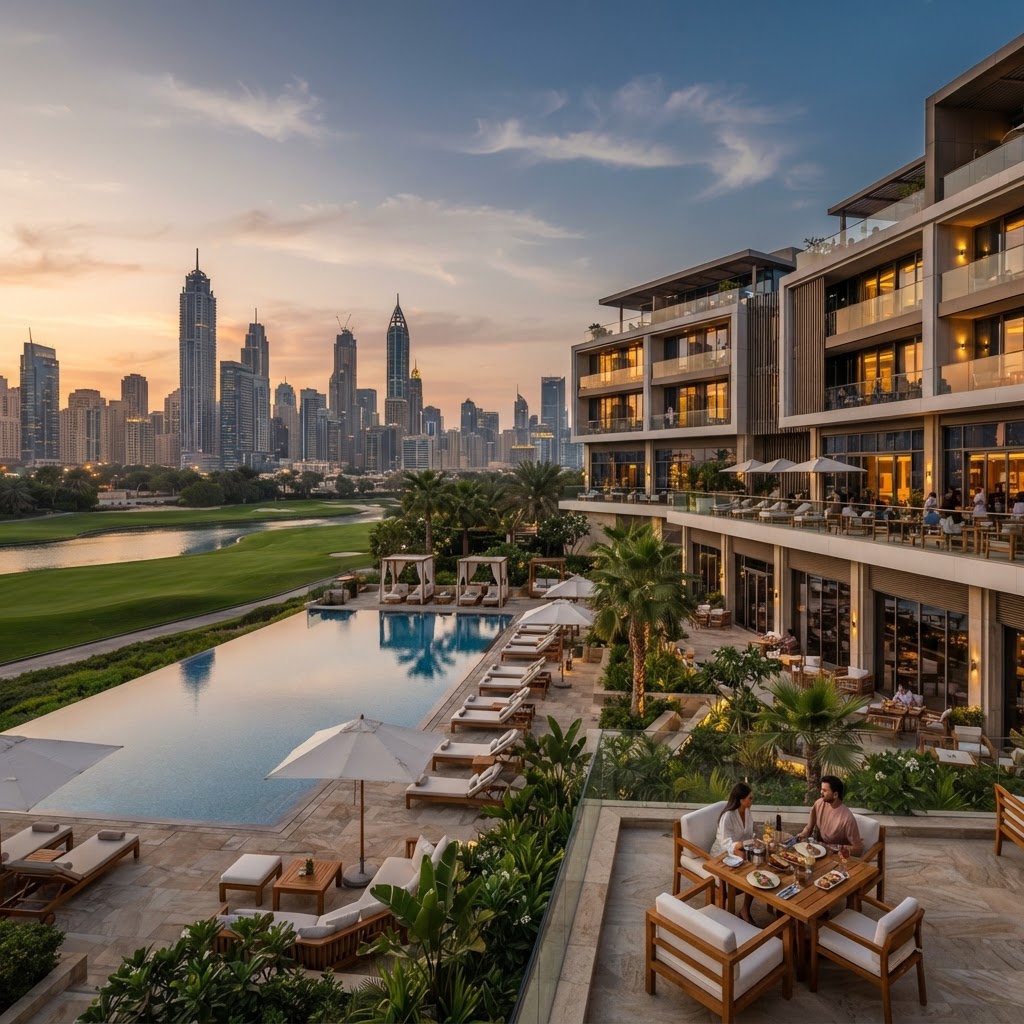
Dubai hotel investment has emerged as one of the most compelling opportunities in the global hospitality market, blending the city's position as a world-leading tourism hub with ambitious infrastructure development and investor-friendly regulations. With Dubai welcoming over 17 million overnight visitors in 2025 and targeting 25 million by 2033, the emirate's hotel sector continues to attract capital from institutional funds, private equity groups, family offices and individual investors seeking both income yield and capital appreciation. This comprehensive guide examines everything you need to know about investing in Dubai's hotel market—from understanding the regulatory framework and identifying the right property types to navigating acquisition structures, financing options, and operational strategies that maximise returns in this dynamic Middle Eastern gateway.
Key Takeaways
- Dubai's hotel market benefits from robust tourism growth, world-class infrastructure, zero income tax, and 100% foreign ownership rights in designated zones.
- Investors can choose from branded international hotels, boutique properties, serviced apartments, holiday rentals, and emerging segments like wellness resorts and eco-lodges.
- Acquisition structures include freehold ownership, leasehold arrangements, and joint ventures with local sponsors, each with distinct legal and financial implications.
- Financing options range from local UAE banks offering competitive rates to international lenders, Islamic finance structures, and private equity partnerships.
- Regulatory compliance requires navigating DTCM licensing, trade licence registration, visa quotas, and sector-specific regulations for short-term rentals and branded residences.
- Operational success hinges on location selection, brand positioning, revenue management expertise, and understanding seasonal demand patterns across Dubai's diverse tourism segments.
- Due diligence must cover title verification, existing contracts, occupancy history, staff agreements, and environmental compliance to avoid costly post-acquisition surprises.
Why Dubai Remains a Premier Hotel Investment Destination in 2026
Unmatched Tourism Growth and Infrastructure Momentum
Dubai continues to cement its position as one of the world's most compelling hospitality investment markets, with 22.6 million overnight visitors recorded in 2025 and projections targeting 25 million by 2027 under the Dubai Economic Agenda D33. This ambitious framework aims to double the emirate's economy and position Dubai among the top three global cities by 2033, with tourism and hospitality central to this vision. The Expo 2025 legacy continues to drive occupancy forecasts upward through 2026, further enhancing investment opportunities.
The physical infrastructure supporting this growth remains unparalleled. The Al Maktoum International Airport expansion is progressing toward its planned capacity of 260 million passengers annually, while the Dubai Metro Blue and Purple Lines will directly connect key hotel zones including Dubai Marina, Jumeirah Beach, and Palm Jumeirah by 2029. These projects aren't distant promises—they're active construction sites reshaping accessibility and guest flow patterns across the emirate.
Tax Efficiency and Regulatory Advantages
Dubai's zero personal income tax, zero capital gains tax, and zero withholding tax on dividends create a uniquely favourable environment for hotel investors seeking to maximise net returns. Corporate tax introduced in 2023 remains at just 9% for profits exceeding AED 375,000 (approximately USD 102,000), still among the lowest globally. When combined with 100% foreign ownership now permitted across most sectors and repatriation of 100% of capital and profits, the fiscal framework significantly outperforms competing gateway cities.
Visa reforms have removed traditional barriers to investment and operation. The 10-year Golden Visa for property investors (minimum AED 2 million investment) and the new 5-year multiple-entry tourist visa both contribute to longer stays and repeat visitation—critical metrics for hotel performance and valuation multiples.
Demonstrated Market Resilience and Yield Performance
Dubai's hospitality sector has consistently demonstrated recovery speed that outpaces regional competitors. Following the 2020 disruption, the market achieved 82% occupancy rates by Q4 2024, with Average Daily Rates (ADR) surpassing AED 650 (USD 177) across the emirate—a premium of 18-22% above 2019 levels when adjusted for inflation.
Comparative yield analysis positions Dubai favourably:
| Gateway City | Average Hotel Cap Rate | ADR Growth (2024-2026) | Occupancy Stability |
|---|---|---|---|
| Dubai | 7.5-9.2% | +12% | 78-84% |
| Singapore | 5.8-7.1% | +8% | 75-82% |
| London | 6.2-7.8% | +6% | 72-79% |
| Miami | 6.8-8.4% | +9% | 71-77% |
MICE Sector Strength and Business Tourism
The post-Expo 2020 legacy infrastructure—including the Dubai Exhibition Centre (the world's largest purpose-built exhibition venue at 2.4 million square metres)—has positioned Dubai as the Middle East's undisputed MICE hub. The city hosted over 480 international conferences and exhibitions in 2025, generating extended stays and mid-week occupancy that smooths seasonal revenue volatility.
Dubai's geographic position enables 8-hour flight access to 3 billion people, creating a natural stopover market between Europe, Asia, and Africa. This connectivity advantage, combined with Emirates and flydubai operating over 3,600 weekly flights, ensures consistent feeder traffic across both leisure and business segments—a diversification that institutional investors particularly value when underwriting long-term hotel acquisitions.
For more insights on Dubai's hotel investment landscape, visit our Dubai Hotel Expo 2025 Legacy & Occupancy Forecasting Guide.
Understanding Dubai's Hotel Property Types and Investment Segments
Full-Service International Chain Hotels
These properties represent the traditional institutional-grade investment, typically ranging from AED 180 million to AED 850 million (USD 49-231 million) for established assets in prime locations like Downtown Dubai or Dubai Marina. Full-service hotels operate under franchise agreements with brands such as Marriott, Hilton, Accor, or IHG, offering comprehensive amenities including multiple F&B outlets, meeting spaces, spa facilities, and concierge services.
Investor profile: Institutional funds, family offices, and high-net-worth individuals seeking passive income through professional third-party management. Expect net operating income (NOI) yields of 6.5-8.5% before debt service, with management fees typically consuming 3-5% of gross revenue. These properties suit investors comfortable with AUM of USD 50 million+ who prioritise brand recognition and operational stability over hands-on involvement.
Limited-Service and Select-Service Properties
The AED 45-120 million (USD 12-33 million) segment encompasses brands like Hampton by Hilton, ibis, or Rove Hotels—properties with 150-250 rooms, limited F&B (often breakfast-only), and streamlined operations. These assets deliver higher profit margins (35-42% vs. 28-35% for full-service) due to reduced staffing and operational complexity.
Target guests include business travellers on corporate rates, airline crews, and budget-conscious leisure visitors. This segment experienced the fastest recovery post-2020, with many properties achieving break-even occupancy below 45% compared to 55-60% for full-service competitors.
Boutique Hotels and Design-Led Properties
Dubai's boutique segment—typically 15-80 rooms, AED 25-95 million investment—caters to affluent travellers seeking authentic experiences and personalised service. Areas like Al Fahidi Historical District, Jumeirah, and emerging neighbourhoods like Al Quoz (the arts district) host these properties.
Operational consideration: Boutique hotels demand hands-on ownership or highly skilled independent operators. While they command ADR premiums of 25-40% over comparable chain properties, they lack the distribution power and operational systems of franchised competitors. Best suited for investors with hospitality operating experience or those willing to partner with specialist management companies.
Serviced Apartments and Apart-Hotels
This rapidly growing segment blurs the line between hotel and residential investment. Properties typically feature studio to three-bedroom units with kitchenettes, housekeeping services, and hotel-style amenities. Investment thresholds range from AED 35-180 million depending on location and unit count.
Regulatory clarity arrived with DTCM's hotel apartment classification framework, which distinguishes these from short-term holiday homes. Serviced apartments attract extended-stay business travellers, relocating executives, and medical tourists, with average lengths of stay between 12-45 nights versus 3.2 nights for traditional hotels. This creates more predictable cash flow and reduced operational intensity.
Holiday Homes and Short-Term Rental Units
The most accessible entry point for individual investors, with studio apartments starting from AED 650,000 (USD 177,000) in areas like Dubai Sports City or International City. Premium holiday homes in Palm Jumeirah or Downtown Dubai command AED 3-15 million.
Critical regulatory framework: Law No. 4 of 2021 mandates DTCM permits for all short-term rentals (under 90 days). Properties must meet specific safety and quality standards, and hosts face fines up to AED 50,000 for unlicensed operation. Net yields typically range 6-10% after management fees (if using platforms like Airbnb Luxe or Booking.com), maintenance, and DEWA (utilities).
Specialised Segments: Desert Resorts, Beach Resorts, and Wellness Retreats
Dubai's geographic diversity enables niche positioning. Desert conservation resorts (like those in the Dubai Desert Conservation Reserve) require AED 120-400 million investments but target ultra-high-net-worth guests paying AED 4,000+ per night. Beach resorts along Jumeirah Beach or Palm Jumeirah command similar investment levels with more predictable year-round demand.
Wellness and medical tourism properties represent an emerging opportunity, supported by Dubai's positioning as a healthcare hub. These typically combine hotel accommodation with licensed wellness facilities, requiring specialised operational expertise but accessing the region's growing medical tourism market (estimated 850,000 medical tourists in 2025).
The Complete Hotel Acquisition Process in Dubai: Step-by-Step
Phase 1: Market Research and Feasibility (Weeks 1-6)
Begin with comprehensive market analysis examining occupancy trends, ADR performance, and competitive supply in your target segments and locations. Commission a feasibility study from recognised consultants (Colliers, JLL, Knight Frank Dubai) costing AED 45,000-120,000 depending on property complexity. This study should model revenue projections, operating expenses, capital expenditure requirements, and sensitivity analysis across various scenarios.
Identify your investment thesis: Are you pursuing value-add repositioning, stabilised cash flow, or development opportunities? This determines your target property profile and required capital structure. Simultaneously, engage a Dubai-based hospitality lawyer and arrange pre-approval for financing if leveraging debt—most UAE banks require 40-50% down payment for hotel acquisitions.
Phase 2: Property Search and Shortlisting (Weeks 4-10)
Work with specialised hospitality brokers who access off-market opportunities and understand operational nuances that general commercial agents miss. The Dubai hotel transaction market includes on-market listings, off-market approaches, and distressed situations requiring different negotiation strategies.
Conduct preliminary site visits examining physical condition, location attributes, competitive set, accessibility, and neighbourhood dynamics. Request trailing 12-month financial statements, current STR reports, franchise agreement terms (if applicable), and existing management contracts. Create a shortlist of 2-4 properties warranting deeper investigation.
Phase 3: Letter of Intent and Preliminary Due Diligence (Weeks 10-14)
Once you've identified your preferred asset, submit a Letter of Intent (LOI) outlining proposed purchase price, key terms, exclusivity period (typically 45-90 days), deposit amount, and conditions precedent. The LOI is generally non-binding except for confidentiality and exclusivity clauses.
Deposit 2-5% of purchase price into an escrow account managed by a reputable law firm. Begin preliminary due diligence focusing on deal-breakers: title verification at Dubai Land Department, confirmation of trading licences, review of major contracts (management, franchise, supplier agreements), and preliminary building inspection.
Phase 4: Comprehensive Due Diligence (Weeks 14-20)
This intensive phase requires coordinated workstreams:
-
Legal due diligence: Title searches, encumbrance checks, zoning compliance, permits and licences verification, employment contract review, litigation searches, intellectual property rights (especially for branded properties), review of all material contracts.
-
Financial due diligence: Verification of historical financial statements, revenue analysis by segment (rooms, F&B, other), expense benchmarking, working capital assessment, tax compliance review, audit of accounts receivable and payable, capital expenditure history and requirements.
-
Technical due diligence: Comprehensive building survey by chartered engineers, MEP (mechanical, electrical, plumbing) systems assessment, structural integrity evaluation, environmental compliance audit, health and safety review, FF&E (furniture, fixtures, equipment) condition assessment and replacement schedule.
-
Operational due diligence: Guest satisfaction metrics analysis, online reputation review, staff assessment, operational systems evaluation, brand standards compliance (for franchised properties), competitive positioning validation.
Budget AED 180,000-450,000 for professional due diligence costs on a mid-market hotel acquisition.
Phase 5: SPA Negotiation and Financing Finalisation (Weeks 20-24)
Your lawyer drafts the Sale and Purchase Agreement (SPA) incorporating due diligence findings, negotiated warranties and indemnities, completion mechanics, and post-completion obligations. Key negotiation points include allocation of risk for operational performance between signing and completion, treatment of advance bookings and deposits, and retention amounts for warranty claims.
Finalise debt financing with submission of complete due diligence package to lenders. UAE banks typically offer 55-60% LTV for stabilised hotel assets with interest rates of 6.5-8.5% (as of 2026) depending on property quality and borrower profile. Arrange buildings insurance and key-person insurance if required by lenders.
Phase 6: Regulatory Approvals and Completion (Weeks 24-28)
Obtain DTCM approval for ownership transfer and confirm all trading licences remain valid through the transaction. If the acquisition involves company shares rather than asset purchase, secure approvals from the Department of Economic Development.
Completion occurs at Dubai Land Department with payment of 4% transfer fee (2% buyer, 2% seller, though negotiable) plus administrative charges. The seller's existing mortgage is discharged, your new mortgage is registered, and title transfers to your ownership entity. Budget total transaction costs of 6-8% of purchase price including transfer fees, legal fees, agency fees, and due diligence costs.
Phase 7: Post-Acquisition Integration (Weeks 28-40)
Implement your operational strategy whether continuing with existing management, transitioning to new operators, or self-managing. Address deferred maintenance identified in due diligence, implement revenue management systems, renegotiate supplier contracts, and execute any repositioning or refurbishment plans. Most investors allow 3-6 months stabilisation period before judging performance against underwriting assumptions.
Understanding the seller's perspective can streamline negotiations—learn more in our guide to selling hotels in Dubai. Before making an offer, investors typically evaluate key factors.
Legal Structures, Ownership Models and Regulatory Framework
Legal Structures, Ownership Models and Regulatory Framework
Investing in Dubai's hotel market requires a deep understanding of legal structures, ownership models, and regulatory frameworks. This guide provides insights into these critical aspects to help investors make informed decisions.
Freehold vs. Leasehold Ownership: Understanding Your Rights
Dubai operates a designated freehold zone system where foreign investors can acquire absolute ownership rights. These areas—including Downtown Dubai, Dubai Marina, Palm Jumeirah, Business Bay, and over 40 other designated zones—grant perpetual freehold title with rights to sell, lease, mortgage, or bequeath the property without restriction.
Outside designated freehold areas, properties are available on leasehold terms typically spanning 99 years. While leasehold interests are renewable and tradeable, they require more careful structuring for financing and exit planning. Most institutional investors and international hotel brands strongly prefer freehold assets due to balance sheet treatment and financing flexibility. When evaluating opportunities, verify the ownership type through Dubai Land Department records—some older properties in transitional areas have complex tenure arrangements requiring specialist legal interpretation. Investors must choose between free zone and mainland freehold structures—see our detailed comparison of Dubai hotel ownership models.
Company Formation: Mainland vs. Free Zone Structures
Hotel ownership in Dubai requires establishing a UAE legal entity—you cannot hold property in personal name as a foreign national. The choice between mainland and free zone incorporation carries significant operational implications:
-
Mainland LLC (Limited Liability Company): Allows 100% foreign ownership since 2021 reforms, permits trading throughout the UAE without restrictions, and enables direct hotel operation under DTCM licensing. However, mainland companies require a registered office in Dubai (costing AED 25,000-65,000 annually) and must comply with UAE Commercial Companies Law. This structure suits investors planning hands-on hotel operation or multiple property portfolios.
-
Free Zone Company (DMCC, DIFC, JAFZA, etc.): Offers 100% foreign ownership, zero currency restrictions, and often simplified formation procedures. However, free zone companies face restrictions on mainland trading and may require additional licensing to operate hotels outside their free zone. The Dubai Multi Commodities Centre (DMCC) and Dubai International Financial Centre (DIFC) are popular for holding companies owning hotel assets, with DIFC offering common law legal framework preferred by international investors.
Formation costs range AED 35,000-85,000 depending on structure, with annual renewal fees of AED 20,000-50,000. Most investors establish a free zone holding company owning a mainland operating company to optimise tax efficiency and operational flexibility.
DTCM Licensing Categories and Requirements
The Department of Economy and Tourism (DTCM) regulates all tourist accommodation through a classification system:
-
Hotel Classification: 1-5 star ratings based on facilities, services, and quality standards. New hotels undergo pre-opening inspection, with annual compliance audits. Classification determines permissible rate ranges and guest expectations. The application process requires architectural plans, operational procedures, staff training certification, and health and safety compliance documentation. All hotels must comply with DTCM star rating and classification requirements.
-
Hotel Apartment Classification: Separate framework for serviced apartments requiring self-contained units with cooking facilities, minimum unit sizes (studio: 35 sqm, one-bed: 50 sqm), and specific service standards. These properties must maintain hotel-standard housekeeping, reception services, and security.
-
Holiday Home Permit: Introduced under Law No. 4 of 2021, this permit allows short-term rental of residential units. Requirements include owner consent (for leased properties), building management approval, minimum safety standards (smoke detectors, fire extinguishers, emergency lighting), and compliance with community regulations. Annual permit fees are AED 1,500-2,500 depending on property size and location.
Operating without appropriate DTCM licensing carries penalties up to AED 50,000 per violation plus potential property closure orders.
Visa Allocations and Sponsorship Rules
Hotel ownership entities can sponsor employment and investor visas based on company structure and operational scale:
- Mainland hotel operating companies: Visa quota based on office space (typically 1 visa per 100 sqm) plus additional allocations for operational staff. A 50-room hotel typically qualifies for 15-30 visa allocations.
- Free zone companies: Visa allocations based on licence type and office lease, ranging from 1-6 visas for standard licences to unlimited for larger operations.
- Investor visas: Property owners investing AED 2 million+ qualify for 10-year Golden Visa, while smaller investments (AED 750,000+) may qualify for standard 2-year renewable investor visas.
Visa processing through company sponsorship takes 2-4 weeks and costs approximately AED 5,000-8,000 per person including medical screening, Emirates ID, and related fees.
Short-Term Rental Regulations and Compliance
Law No. 4 of 2021 fundamentally changed Dubai's holiday home landscape, requiring all short-term rentals (under 90 days) to obtain DTCM permits. Key compliance requirements:
- Properties must be in buildings where at least 75% of units are designated for short-term rental use, or in buildings where master developers/owners' associations have approved short-term letting
- Minimum safety standards including fire safety equipment, emergency procedures, and guest registration systems
- Mandatory listing of DTCM permit numbers on all advertising platforms
- Collection and remittance of tourism dirham fees (AED 7-20 per room per night depending on property classification)
- Guest registration with Dubai Police within 24 hours of check-in
Many residential communities (particularly older developments) have rejected short-term rental permits, making due diligence on community regulations essential before acquiring holiday home investments. Buildings with DTCM-approved short-term rental status command valuation premiums of 15-25% over comparable buildings without this designation.
Strata Title Considerations for Serviced Apartments
Serviced apartment investments often involve strata title ownership where you own individual units within a larger building. Critical legal considerations include:
- Review of owners' association bylaws regarding commercial use, operational restrictions, and service charge calculations
- Understanding of common area maintenance obligations and reserve fund contributions
- Verification that building permits allow hotel apartment operation—some residential strata developments prohibit commercial hospitality use
- Analysis of other owners' usage patterns—mixed-use buildings with residential and hotel apartments can create operational conflicts and guest experience challenges
Most purpose-built hotel apartment developments establish master lease or rental pool arrangements where professional operators manage all units under unified branding, distributing revenue to individual owners. These structures provide passive income but require careful review of management terms, fee structures, and performance guarantees.
Financing Your Dubai Hotel Investment: Options, Costs and Strategies
UAE Banking and Local Lender Options
Securing financing for Dubai hotel acquisitions typically begins with UAE-based banks, which possess a deep understanding of the local hospitality market dynamics. Loan-to-value ratios generally range from 60-70% for established properties with proven trading histories, though newer or higher-risk assets may only qualify for 50-60% LTV. Interest rates in 2026 hover between 5.5-7.5% for prime borrowers, with terms extending 10-15 years for commercial hospitality assets.
Major UAE lenders such as Emirates NBD, Mashreq Bank, and Abu Dhabi Commercial Bank maintain dedicated hospitality finance teams. Expect deposit requirements of 30-40% of the purchase price, alongside arrangement fees of 1-2%, valuation costs (AED 15,000-50,000 depending on property size), and legal fees typically running 0.5-1% of the loan amount.
Islamic Finance Structures
Dubai's position as a global Islamic finance hub offers Sharia-compliant alternatives that appeal to many investors. Murabaha agreements involve the bank purchasing the property and reselling it to you at a marked-up price paid in installments, effectively creating a profit-sharing arrangement rather than interest-bearing debt. Ijara structures function as lease-to-own arrangements where the bank owns the asset while you make rental payments with an eventual transfer of ownership.
These structures often provide competitive rates and can offer tax advantages in certain jurisdictions. Dubai Islamic Bank and Abu Dhabi Islamic Bank lead this sector, with financing costs comparable to conventional loans when properly structured.
Alternative Financing Routes
International lenders increasingly participate in Dubai hotel transactions, particularly for larger assets exceeding AED 50 million. These institutions may offer more flexible terms but require extensive due diligence and typically charge 0.5-1% higher rates than local banks to compensate for perceived additional risk. Non-resident investors have access to specialized mortgage financing options that cater to international buyers.
Mezzanine debt fills the gap between senior debt and equity, typically covering 10-20% of the capital stack at rates of 10-14%. This subordinated debt allows investors to reduce equity requirements while maintaining control.
Private equity partnerships and syndication models distribute risk across multiple investors. These structures work particularly well for portfolio acquisitions or development projects requiring AED 100 million plus. Expect to allocate 20-30% promoted interest to the general partner managing the investment.
Seller financing occasionally emerges in Dubai's market, particularly when owners seek tax-efficient exits or struggle to find qualified buyers. Terms vary widely but typically involve 20-30% deposits with 3-5 year balloon payments.
Explore the full range of financing options available for hospitality properties to find solutions that best fit your investment strategy.
Building Banking Relationships
Successful financing in Dubai requires establishing credibility with local institutions well before making offers. Open UAE bank accounts, maintain substantial deposits, and engage relationship managers early. Provide comprehensive business plans demonstrating market knowledge, operational expertise, and realistic projections. Investors with existing UAE property portfolios or successful hospitality track records command significantly better terms—sometimes 0.5-1% lower rates and higher LTV ratios.
Investment Costs, Returns and Financial Performance Benchmarks
Acquisition Price Ranges by Segment
Dubai hotel acquisition costs vary significantly by location and category. Downtown Dubai and DIFC three-to-four-star properties trade at AED 400,000-750,000 per key, while five-star assets command AED 900,000-1,500,000 per key. Dubai Marina and JBR properties typically range AED 350,000-650,000 per key for mid-market hotels, with luxury assets reaching AED 800,000-1,200,000 per key.
Deira and Bur Dubai heritage areas offer better value at AED 250,000-450,000 per key for three-star properties, though these require careful assessment of renovation needs and market positioning. Business Bay and Al Barsha represent middle-ground opportunities at AED 300,000-550,000 per key, benefiting from metro connectivity and corporate demand.
Serviced apartment buildings trade at 10-20% discounts to equivalent hotel assets due to longer-stay operational models and different revenue profiles.
Transaction and Establishment Costs
| Cost Category | Typical Range | Notes |
|---|---|---|
| DLD Transfer Fee | 4% of purchase price | Paid to Dubai Land Department |
| Agent Commission | 2% (1% each side) | Negotiable on larger transactions |
| Legal Fees | 1-1.5% | Due diligence, contract review, completion |
| Valuation | AED 20,000-75,000 | Depends on property size and complexity |
| Technical Surveys | AED 30,000-150,000 | Structural, MEP, environmental assessments |
| Licensing Transfers | AED 10,000-25,000 | DTCM permit transfers and updates |
| Working Capital | 3-6 months operating costs | Essential buffer for smooth transitions |
Renovation budgets require careful planning. Light cosmetic refreshes run AED 15,000-30,000 per room, mid-level refurbishments cost AED 40,000-75,000 per room, and complete repositioning projects demand AED 80,000-150,000 per room including public areas and systems upgrades.
Return Expectations and Performance Benchmarks
Net operating income yields for stabilised Dubai hotels typically range 6-10%, with premium locations achieving the lower end due to higher acquisition multiples, while emerging areas deliver higher yields reflecting additional risk. Downtown Dubai five-star properties often trade at 6-7% NOI yields, while Deira three-star assets may deliver 9-10%.
RevPAR benchmarks in 2026 show significant variation: Downtown Dubai luxury hotels achieve AED 650-900, Dubai Marina mid-market properties average AED 350-500, and Deira heritage hotels generate AED 200-350. Occupancy expectations range from 75-85% for well-positioned properties, with shoulder seasons (May-September) testing operational efficiency.
Capital appreciation in Dubai hospitality has historically delivered 4-6% annually in established areas, though this varies with economic cycles and supply dynamics. Exit multiples typically range 12-16x EBITDA for quality assets with strong management and market positioning.
Factor in service charge and maintenance fee structures when calculating net returns to ensure comprehensive financial planning.
Real-World Performance Example
A 120-key four-star hotel in Business Bay acquired in 2024 for AED 54 million (AED 450,000 per key) achieved 78% occupancy at AED 425 RevPAR in its first full year under new ownership following a AED 4.8 million renovation. Annual gross revenue reached AED 22.8 million with a 42% flow-through to AED 9.6 million NOI, delivering a 7.8% NOI yield and 14.2% cash-on-cash return after debt service on 65% LTV financing.
Calculate your projected returns with our Hospitality ROI Calculator to understand potential profitability.
Use our Property Valuation Tool to estimate market value accurately, ensuring informed investment decisions.
Operational Strategies and Management Models for Maximum Returns
Management Structure Decision Framework
Choosing the right operational model fundamentally impacts your Dubai hotel investment returns. Self-management offers maximum control and eliminates management fees (typically 3-5% of gross revenue), but requires deep hospitality expertise, local market knowledge, and hands-on involvement. This works best for experienced operators with existing UAE infrastructure and smaller properties under 80 keys.
Third-party management contracts provide professional expertise whilst you retain ownership benefits. Expect base fees of 2-4% of total revenue plus incentive fees of 8-12% of gross operating profit. Negotiate performance clauses requiring minimum occupancy thresholds (typically 70-75%) and RevPAR indices against competitive sets. Contract terms usually span 5-10 years with break clauses after year three if performance targets aren't met.
Develop a comprehensive operational strategy using our Business Plan Generator to model different management scenarios and maximize your returns.
International Brand Franchise Considerations
Franchise agreements with major brands (Marriott, Hilton, IHG, Accor) deliver instant market recognition and distribution power. Franchise fees typically comprise 4-6% of room revenue plus 2-3% for marketing contributions. Initial franchise fees range AED 200,000-500,000 depending on brand tier and property size.
The critical calculation: does the brand premium justify the fees? Downtown Dubai five-star properties often achieve 15-25% RevPAR premiums under recognised flags, easily covering franchise costs. However, three-star properties in secondary locations may struggle to recoup fees, making independent operation more profitable.
Soft-brand affiliations (Marriott Tribute, Hilton Curio, IHG Voco) offer middle-ground solutions—brand distribution systems and loyalty programmes with lower fees (2-4% of room revenue) and greater operational flexibility.
Revenue Management and Distribution Excellence
Maximising returns requires sophisticated revenue management systems (RMS) costing AED 30,000-80,000 annually but typically delivering 8-15% revenue uplifts through dynamic pricing optimisation. Implement yield management strategies adjusting rates based on demand patterns, booking windows, and competitive positioning.
Distribution channel strategy dramatically affects profitability. Online travel agencies charge 15-25% commissions, eroding margins significantly. Target a healthy mix: 35-45% direct bookings (website, phone, email), 30-40% OTA channels (Booking.com, Expedia, Agoda), 15-25% corporate contracts and travel agents. Invest in direct booking engines and metasearch advertising (Google Hotel Ads, Trivago) to reduce OTA dependency.
Staffing and Labour Management
Dubai's hospitality labour market requires careful navigation. Visa quotas limit the ratio of employees to business size—hotels typically receive quotas for 1 visa per 2-3 rooms. Monthly labour costs per occupied room average AED 800-1,200 for three-star properties and AED 1,500-2,500 for five-star hotels.
Staff accommodation represents a significant consideration. Many operators provide shared accommodation costing AED 600-1,200 per employee monthly, or offer housing allowances of AED 1,500-3,000. Factor these costs into operational budgets alongside visa processing fees (AED 5,000-8,000 per employee including medical and Emirates ID).
Technology Infrastructure Requirements
Modern hotel operations demand robust technology: property management systems (AED 40,000-120,000 annually), channel managers (AED 15,000-35,000), booking engines (AED 20,000-50,000), revenue management systems, and guest experience platforms. Budget 2-3% of revenue for technology infrastructure and maintenance.
Seasonal Demand Optimisation
Dubai's pronounced seasonality requires strategic planning. Peak season (October-April) drives 65-70% of annual revenue. Maximise these months through dynamic pricing, minimum length-of-stay requirements during major events (Dubai Shopping Festival, Expo periods, New Year), and corporate contract negotiations. Shoulder months (May-September) demand creative programming—staycation packages for UAE residents, corporate meeting incentives, and airline crew contracts provide base occupancy.
For further insights and tools to enhance your investment strategy, explore our parent Dubai Hotel Investment Guide and related resources on buying hotels in Dubai.
Due Diligence Checklist and Common Investment Pitfalls to Avoid
Legal and Title Verification
Commence due diligence by obtaining an official title deed search from the Dubai Land Department to confirm clean ownership, existing mortgages, and any registered encumbrances. Verify the property's freehold status—some older buildings in Deira and Bur Dubai operate under complex leasehold arrangements that complicate financing and resale.
Engage qualified UAE property lawyers (budget AED 50,000-150,000 for comprehensive legal due diligence) to review ownership structure, confirm seller authority, check for pending litigation, and verify compliance with UAE commercial property laws. For properties in free zones (DIFC, DMCC), additional regulatory reviews ensure compliance with free zone authority requirements.
Planning, Licensing and Compliance
DTCM hotel classification and licensing requires thorough verification. Confirm current permits remain valid, check classification matches actual standards (misclassified properties face reclassification costs), and verify occupancy certificates for all floors and facilities. Unlicensed or improperly licensed operations risk substantial fines and closure orders.
Review building compliance documentation including civil defence approvals, municipality completion certificates, and occupancy permits. Properties built before 2010 often require upgrades to meet current fire safety standards—budget AED 500,000-2,000,000 for comprehensive fire system upgrades in older buildings.
Technical and Physical Inspections
Commission independent structural surveys, MEP (mechanical, electrical, plumbing) assessments, and environmental audits. Dubai's climate stresses building systems—air conditioning represents 40-50% of utility costs, and ageing systems dramatically impact profitability. Replacement costs for major systems:
- Central air conditioning: AED 8,000-15,000 per room
- Electrical infrastructure upgrades: AED 5,000-10,000 per room
- Plumbing and water systems: AED 4,000-8,000 per room
- Lift replacements: AED 400,000-800,000 per lift
- Building facade repairs: AED 1,500-3,500 per square metre
Identify deferred maintenance liabilities and factor these into purchase price negotiations or post-acquisition budgets.
Financial and Operational Due Diligence
Demand three years of audited accounts including profit and loss statements, balance sheets, and cash flow statements. Verify revenue through PMS data, bank statements, and VAT returns. Analyse occupancy and rate trends using STR reports or similar benchmarking data to confirm the property's competitive positioning.
Review all existing contracts: management agreements (note termination provisions and costs), supply contracts (F&B, laundry, maintenance), employment agreements (gratuity liabilities often surprise buyers), brand franchise agreements (transfer fees and ongoing obligations), and any revenue-sharing arrangements with third parties.
Critical Pitfalls to Avoid
Underestimating service charge obligations ranks as the most common investor mistake. Dubai properties in mixed-use developments face annual service charges of AED 15-35 per square foot. For a 15,000 square metre hotel, this represents AED 2.5-5.5 million annually—verify exact charges and escalation clauses before committing.
Inadequate refurbishment budgeting frequently derails investment returns. Conduct room-by-room condition assessments and obtain detailed contractor quotes. Add 15-20% contingency for unforeseen issues—Dubai's building regulations and quality standards often exceed initial estimates.
Weak management agreement terms lock investors into underperforming operations. Ensure contracts include clear performance metrics, operator removal provisions, and reasonable exit terms. Avoid agreements exceeding 7-10 years without substantial break clauses.
Insufficient working capital reserves cause cash flow crises during transitions or renovation periods. Maintain 4-6 months of operating expenses (typically AED 3-8 million for mid-sized properties) accessible for unexpected costs, seasonal variations, or market disruptions.
Overlooking competitive supply analysis leads to poor timing. Research pipeline supply in your target area—excessive new supply can depress rates and occupancy for 2-3 years. Downtown Dubai and Business Bay have experienced such cycles, with new openings temporarily impacting existing properties by 10-15% in key metrics.
Understanding how long hotel due diligence typically takes helps investors plan their acquisition timeline effectively.
Planning Your Exit: Hotel Investment Exit Strategies in Dubai
Planning Your Exit: Hotel Investment Exit Strategies in Dubai
Investing in the Dubai hotel market can yield significant returns, but understanding how and when to exit is crucial for maximizing your investment. Here, we explore key considerations for planning a successful exit strategy.
Typical Hold Periods
In the Dubai hotel industry, investors typically hold properties for 5 to 10 years. This duration allows you to capitalize on market growth, operational improvements, and asset appreciation. However, the ideal hold period can vary based on individual investment goals and market conditions.
Timing Your Exit
Exit timing is influenced by several factors:
- Market Cycles: Monitor Dubai's real estate cycles closely. Exiting during a market upswing can enhance your returns, while downturns may necessitate a longer hold.
- Tourism Trends: Dubai's tourism sector is a key driver of hotel performance. Pay attention to trends such as major events, new attractions, and changes in visitor demographics.
Preparing for Sale
To optimize your hotel's value at sale, consider the following steps:
- Financial Audit: Conduct a comprehensive financial audit to ensure accuracy and transparency in your financial statements.
- Property Upgrades: Invest in necessary renovations or upgrades to increase the property's appeal to potential buyers.
- Marketing Strategy: Develop a robust marketing strategy highlighting your hotel's unique selling points and financial performance.
Valuation Optimization
Optimizing your hotel's valuation involves:
- Revenue Enhancement: Implement strategies to boost occupancy rates and average daily rates (ADR).
- Cost Management: Streamline operations to improve profit margins.
- Brand Reputation: Maintain a strong online presence and positive guest reviews to enhance perceived value.
Call-to-Action
Download our comprehensive Selling Guide to understand how to maximize your hotel's value when it's time to exit your investment. This resource provides detailed insights into the sales process, valuation techniques, and negotiation strategies.
By planning your exit strategy with these considerations in mind, you can ensure a profitable and timely divestment from the Dubai hotel market. For more insights, explore our Complete Guide To Selling A Hotel and related resources.
Frequently Asked Questions
Related Resources
- List Your Hotel for Sale with Instant Valuation
- How to Calculate Hotel Value Online
- Hotel Valuation Formulas: Key Multipliers and Calculation Methods
- Hotel Asset Management Best Practices
- Browse Dubai Hotels for Sale
- selling your Dubai hotel
- service charge and maintenance fee structures
- mortgage financing options for non-residents
- Expo 2025 legacy impact on occupancy
- DTCM star rating classification and compliance costs
- free zone ownership versus mainland freehold comparison
- What financing options are available for purchasing hospitality properties
- How long does hotel due diligence typically take
- What Do Hotel Buyers Look For Before Making an Offer?
- How do investors calculate ROI when evaluating hotel properties
- property valuation tool
- ROI calculator
- AI business plan generator
- browse hotels for sale in Dubai
Reader Feedback
Share your thoughts on "Dubai Hotel Investment Guide". Feedback is reviewed by AI and must relate to this topic before it's published.