
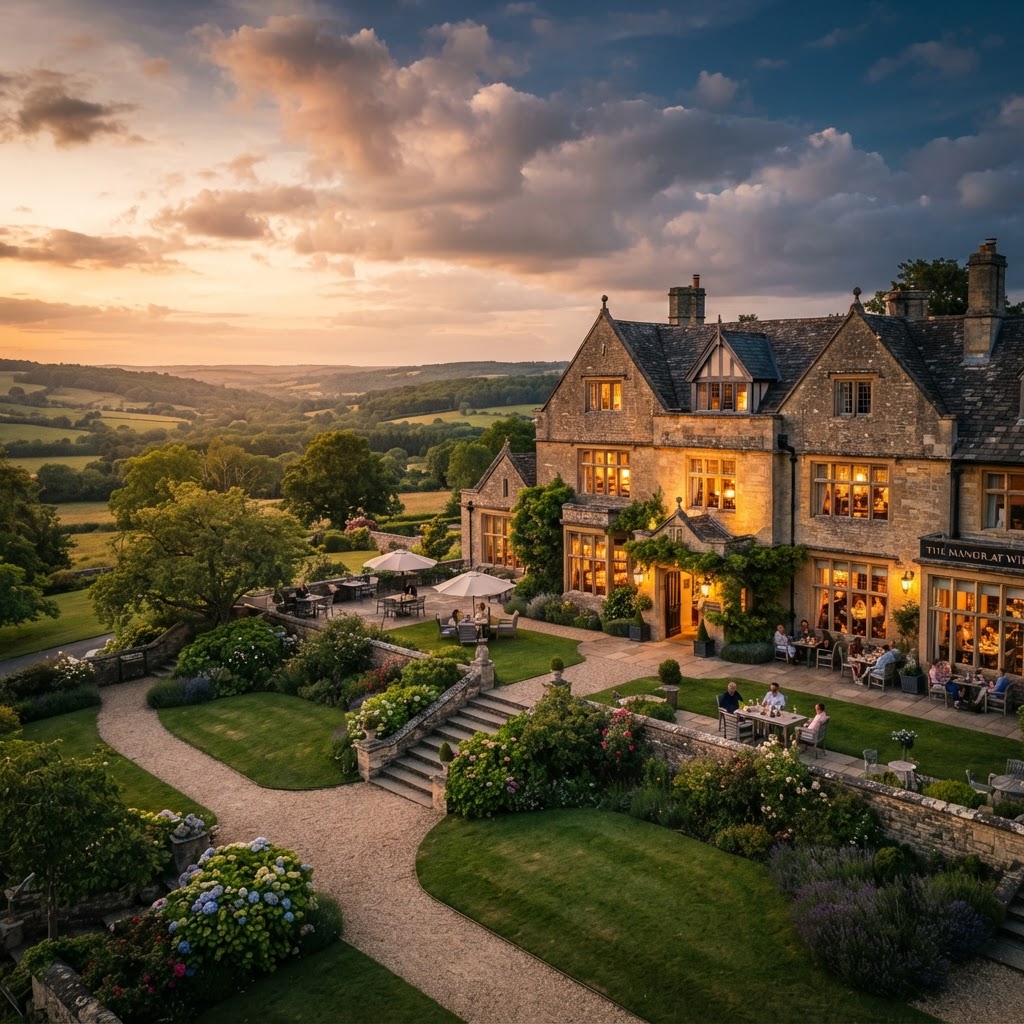
Buying a hotel with a business loan — not a traditional mortgage — offers a faster, more flexible path to acquisition for operators and corporates who prioritise balance sheet agility over real estate collateral. Unlike property-secured lending, SBA loans, bank business loans and alternative hospitality financing assess your operating company’s financial health, not just the bricks and mortar. At Stay4Hospitality, we specialise in connecting buyers with non-mortgage funding solutions, and here’s what matters most: SBA lenders demand stringent cash flow coverage but offer lower rates, banks prioritise corporate financials over asset values, and alternative lenders bridge gaps with speed — albeit at higher costs. This guide dissects how each lender type evaluates eligibility (from debt service ratios to guarantor strength), processes applications (30 days vs 72 hours), and structures collateral (UCC liens vs property deeds). Whether you’re acquiring a boutique hotel or scaling a resort group, we clarify which route aligns with your corporate structure, timeline and financial strategy.
Key Takeaways
- Business loans for hotel purchases rely on cash flow and business credit — not just property value — making them viable even when equity or collateral is limited.
- SBA loan programs are only available in the United States and require strict eligibility criteria including U.S. citizenship or permanent residency, small business size standards, and owner-occupancy or active management commitments.
- Bank business loans for hotels typically demand two to three years of audited financials, strong EBITDA margins, and personal guarantees — but offer lower interest rates and longer terms than alternative lenders.
- Alternative lenders assess hospitality acquisitions using dynamic underwriting: revenue trends, platform performance (e.g., OTA rankings, direct booking share), and operator track record — often funding faster but at higher cost.
- A commercial business loan and a property mortgage serve fundamentally different purposes: one finances the operating entity, the other secures against real estate — mixing them incorrectly risks covenant breaches or capital misalignment.
- Common pitfalls include underestimating working capital needs, overrelying on projected RevPAR growth, and submitting incomplete P&L histories — especially for newly formed SPVs or shell entities.
- Global buyers outside the U.S. must seek jurisdiction-specific alternatives — such as UK EIS-qualifying funds, EU SME loan guarantees, or Australian SME finance schemes — as SBA programs do not apply internationally.
What Counts as a Business Loan for Hotel Acquisition?
What Counts as a Business Loan for Hotel Acquisition?
A business loan for hotel acquisition is fundamentally not a property mortgage — it’s capital extended against the operating business, not the bricks and mortar. While a commercial business loan vs property mortgage may finance the same transaction, they serve different strategic goals: business loans preserve balance sheet flexibility, avoid real estate collateralisation, and support operational readiness — ideal for buyers who already run hospitality businesses, hold corporate entities, or plan rapid portfolio scaling without tying up equity in land titles. Unlike mortgages — which anchor lending to appraised property value and strict LTV ratios — business loans assess your entity’s credit strength, cash flow sustainability, and management track record. This distinction is critical: using a mortgage when you need working capital for staffing, tech integration, or rebranding post-acquisition creates misalignment, covenant breaches, or unexpected refinancing pressure. For clarity, see our full breakdown of the commercial business loan vs property mortgage.
Business Loans vs. Property Mortgages: Core Distinctions
| Feature | Business Loan | Property Mortgage |
|---|---|---|
| Primary Underwriting Focus | Entity creditworthiness, cash flow, EBITDA, debt service coverage ratio (DSCR) | Real estate valuation, loan-to-value (LTV), title clarity, zoning compliance |
| Borrower Structure | Requires formal business entity (e.g., LLC, S-Corp, Ltd) — individuals rarely qualify | Can be issued to individuals, trusts, or entities; personal guarantees common but not always required |
| Collateral Scope | May include equipment, FF&E, receivables, future revenue, or blanket liens across multiple assets | Secured *only* against the real property title; no recourse to operating assets unless cross-collateralised |
| Use of Proceeds | Permits working capital, pre-opening expenses, staffing, branding, tech stack integration, and soft costs | Typically restricted to acquisition price and hard construction/renovation costs only |
| Typical Term Range | 1–7 years (shorter for unsecured or alternative loans; up to 10 years for SBA 7(a)) | 5–30 years (longer amortisations, often with balloon payments after 5–10 years) |
Types of Business Loans for Hotels — With Real-World Benchmarks
-
Unsecured Business Loans
- Require FICO ≥ 720, minimum 2 years of profitable hospitality operations, and personal net worth ≥ 2× loan amount.
- Typical loan sizes: £50,000–£500,000 (UK), $75,000–$750,000 (US), €60,000–€600,000 (EU).
- Interest rates range from 8%–16% APR; repayment terms are usually 12–36 months with daily or weekly ACH deductions.
-
Asset-Based Lending (ABL)
- Collateral includes FF&E (furniture, fixtures, equipment), inventory (linen, F&B stock), and aged receivables (≥90 days past due excluded).
- Advance rates: 50% on FF&E, 75% on eligible receivables, 25% on inventory.
- Requires monthly borrowing base certificates and field exams every 6–12 months.
-
Cash Flow Loans
- Underwritten on trailing 12-month or pro forma EBITDA; DSCR minimums range from 1.20x–1.35x, depending on market risk and operator experience.
- Example: A B&B generating £180,000 annual EBITDA supports a loan requiring ≤ £141,000 in annual debt service (i.e., £180,000 ÷ 1.27 = £141,000).
- Often paired with covenant packages: minimum occupancy thresholds (e.g., 65%), liquidity reserves (3–6 months of debt service), and owner-operator involvement clauses.
Structural Requirements That Define Eligibility
- Entity Validity: Must be an active, tax-compliant business registered in the jurisdiction of operation — dormant or shell entities are disqualified.
- Ownership Transparency: Lenders require full disclosure of beneficial owners, including source-of-funds documentation for equity injections.
- Operational Continuity Clause: Most business loans prohibit sale of the underlying business or change of management without lender consent — unlike mortgages, which focus solely on real estate transfer.
- Cross-Default Provisions: Default on one business loan may trigger acceleration across other facilities held with the same lender — a key risk not present in standalone mortgages.
These distinctions shape everything from application timing and documentation depth to long-term financial flexibility. Choosing correctly starts with aligning the loan’s structure with your ownership model, growth intent, and exit horizon.
Read more: Hospitality ROI Calculator
SBA Hotel Loans: U.S.-Only Eligibility and Requirements
The SBA 7(a) program imposes strict U.S.-specific eligibility criteria for hotel acquisitions — including mandatory entity structure compliance, non-negotiable personal guarantees from all 20%+ owners, and rigorous franchise agreement vetting. Unlike the 504 program, 7(a) requires operational experience validation and full alignment with SBA’s hospitality-specific underwriting matrix. These rules apply uniformly across states but vary significantly by ownership model (e.g., LLC vs. C-corp) and franchise affiliation status. read the full SBA 7(a) Hotel Loan Requirements for U.S. Borrowers: Entity Structure, Personal Guarantees and Franchise Compliance Rules guide
Bank Business Loans for Hotels: Traditional Lending Criteria
Bank Business Loans for Hotels: Traditional Lending Criteria
Mainstream banks impose rigorous financial and operational standards for hotel acquisition loans. These lenders prioritize stable cash flows and experienced management over speculative upside. Unlike property-secured mortgages, bank business loans for hotels are typically extended to the operating entity — not the real estate itself — meaning underwriting focuses on the borrower’s ability to generate recurring earnings, service debt from operations, and absorb cyclical volatility without relying on asset liquidation.
Core Underwriting Metrics
-
Historical Performance: Most banks require 2–3 years of audited financials from both the buyer’s existing hospitality business (if applicable) and the target hotel. Properties with less than 12 months of operating history rarely qualify — unless backed by a strong franchise flag, proven operator, or demonstrable pre-opening capital commitments. Standalone B&Bs or guest houses without formal accounting systems often face outright rejection unless transitioned to GAAP-compliant reporting prior to application.
-
Debt Service Coverage Ratio (DSCR): Banks typically demand a minimum 1.35x DSCR, calculated using trailing 12-month EBITDA (Earnings Before Interest, Taxes, Depreciation and Amortisation), adjusted for owner compensation, non-recurring expenses, and normalized occupancy. For example, a hotel generating $500,000 annual Net Operating Income (NOI) could support approximately $370,000 in annual debt payments ($500,000 ÷ 1.35). Crucially, banks apply a stress test — often reducing projected revenue by 15–25% and increasing interest rates by 200–300 bps — to confirm the DSCR remains ≥1.15x under adverse conditions.
-
Liquidity Reserves: Borrowers must demonstrate 6–12 months of loan payments held in liquid assets post-closing. This includes unrestricted cash, marketable securities, or committed lines of credit — not receivables, inventory, or equity in other real estate.
Documentation Requirements
- Personal Financial Statements for all owners with 20%+ equity, including full disclosure of liabilities, contingent obligations, and offshore holdings
- Property Condition Reports from licensed inspectors, with line-item cost estimates for deferred maintenance exceeding $25,000
- Brand Performance Reports for franchised properties, benchmarked against system-wide RevPAR and ADR medians
- 2-Year Pro Formas, built monthly, with explicit assumptions for occupancy (e.g., 68–74% for independent city hotels), ADR growth (2.5–4.0% annually), and payroll as % of revenue (28–34%)
Common Approval Hurdles
-
Seasonality: Banks may exclude peak-season revenues when calculating qualifying income for resorts or vacation rentals — instead using a 12-month average or rolling 3-year low-season baseline.
-
Management Gaps: First-time buyers often need to present a formal hospitality advisory board plan, naming at least two industry veterans with documented experience managing comparable scale and segment (e.g., full-service urban hotels or premium glamping resorts).
-
Older Properties: Hotels built before 1990 frequently require 15–25% higher equity contributions due to renovation risks — particularly where HVAC, plumbing, or fire suppression systems lack recent certification.
| Requirement | Typical Threshold | Notes |
|---|---|---|
| Minimum Equity Contribution | 25–40% of purchase price | Higher for independent, unflagged, or older assets |
| Personal Credit Score (primary borrower) | ≥680 (FICO) | Scores <650 trigger automatic review or denial |
| Minimum Time in Hospitality Industry | 3–5 years (operator or owner) | Waivable only with co-signer possessing 10+ years’ verified track record |
| Maximum Loan Term | 7–10 years | Amortisation often extends to 20–25 years with balloon maturity |
| Origination Fees | 0.5–2.0% of loan amount | Often rolled into loan principal |
Banks also assess corporate structure rigorously: entities structured as S-corps or LLCs must show clean tax filings, no outstanding payroll liabilities, and consistent distributions aligned with ownership percentages. In the UK, lenders additionally require confirmation of compliance with HMRC’s off-payroll working rules (IR35) if management contracts involve personal service companies. In the US, SBA-guaranteed loans follow separate eligibility criteria — covered in detail in the SBA section of this guide.
Read more: What financing options are available for purchasing hospitality properties
Alternative Lenders for Hospitality Acquisitions
Alternative Lenders for Hospitality Acquisitions
Non-bank lenders fill critical financing gaps for hotel buyers who need faster closings, have complex ownership structures, or operate in niche markets underserved by traditional banks. These lenders specialize in hospitality assets and offer flexible underwriting tailored to the unique cash flow patterns and operational realities of hotels, B&Bs, and resorts. Below we dissect the key categories, terms, advantages, and due diligence steps for navigating this financing landscape.
Lender Types and Hospitality-Specific Terms
| Lender Category | Typical Loan Size | Time-to-Close | Key Requirements | Ideal Use Case |
|---|---|---|---|---|
| Fintech Platforms | $250K-$3M | 2-4 weeks | 680+ credit score, 2-year revenue history | Boutique hotels, small B&Bs |
| Specialty Hospitality Lenders | $1M-$10M | 4-8 weeks | Franchise approval, 1.20x DSCR, 12-month reserves | Midscale franchises, independent resorts |
| Private Credit Funds | $5M+ | 6-10 weeks | Institutional sponsorship, 1.35x DSCR | Portfolio acquisitions, repositionings |
| Revenue-Based Financing | Up to 150% of monthly revenue | 1-2 weeks | 6+ months operating history, credit card receipts | Cash flow gaps during renovations |
Underwriting Flexibility: How Alternative Lenders Differ from Banks
Alternative lenders excel in these areas where traditional banks often decline:
-
Seasonality Adjustments
- Lenders may annualize peak-season revenues to calculate debt service coverage ratios (DSCR)
- Example: A ski resort showing 1.05x DSCR in off-months but 1.80x in winter could qualify
-
EBITDA Addbacks
- Acceptable addbacks typically include:
- One-time renovation expenses (up to 20% of annual EBITDA)
- Owner salaries (if new management will reduce payroll)
- Franchise termination fees for rebranding projects
- Acceptable addbacks typically include:
-
Future Performance Underwriting
- Lenders may fund based on post-renovation projections if:
- A hospitality-specific feasibility study supports the projections
- The borrower contributes 25-35% equity for value-add plays
- Historical occupancy trends justify the upside
- Lenders may fund based on post-renovation projections if:
Cost Structure and Risk Considerations
Pricing Benchmarks
- Interest rates: Prime + 4-8% (vs. banks at Prime + 1-3%)
- Origination fees: 1-3% of loan amount
- Third-party costs: Appraisals ($5K-$15K), franchise approval fees ($10K-$50K)
Covenant Packages
- Cash flow sweeps: 50-75% of quarterly EBITDA above 1.25x DSCR
- Personal guarantees: Typically required for loans under $5M
- Loan-to-value (LTV): Usually capped at 65% for independent hotels, 75% for flags
Prepayment Penalties
- Year 1: 5% of outstanding balance
- Year 2: 3%
- Year 3: 1%
- After Year 3: Typically none
Due Diligence Checklist for Alternative Hospitality Lenders
-
Track Record Verification
- Request portfolio delinquency rates (above 7% is a red flag)
- Ask for 3 recent hotel deals in your asset class
- Verify if they've foreclosed on any hospitality loans
-
Operational Requirements
- Daily revenue reporting thresholds (common above $10K/day)
- Reserve account mandates (often 3-6 months of debt service)
- Franchise approval timelines (critical for branded properties)
-
Exit Strategy Validation
- Confirm if the lender offers:
- Bridge-to-perm loan conversions
- Rate extension options
- Assumption clauses for future sales
- Confirm if the lender offers:
-
Hidden Cost Audit
- Audit for:
- Annual review fees (0.25-0.5% common)
- Technical default fees (e.g., late financial reporting)
- Force-placed insurance markups
- Audit for:
Strategic Use Cases for Alternative Hotel Loans
- Franchise Conversions: Financing the 8-12 month gap between flag removal and new brand onboarding
- Distressed Acquisitions: Funding properties with temporary occupancy dips but strong market fundamentals
- Eco-Upgrades: Securing loans for sustainability retrofits where energy savings justify higher leverage
Worked Example: Financing a 50-Room Independent Hotel
Scenario: $3.5M purchase price, $850K renovation budget
Alternative Lender Terms:
- Loan amount: $3.1M (75% LTV on stabilized value)
- Rate: 9.5% fixed for 5 years
- Term: 7 years (interest-only first 24 months)
- Covenants: 1.20x DSCR, 6-month cash reserve
- Prepayment: 3-2-1% declining penalty
Bank Comparison: Would typically require 1.35x DSCR, 25% down, and reject the renovation addbacks.
This section demonstrates how alternative lenders create viable pathways for hotel acquisitions that banks can't accommodate, provided borrowers thoroughly understand the trade-offs between flexibility and cost.
Hotel Purchase Loan Eligibility: Global Benchmarks and Red Flags
Hotel Purchase Loan Eligibility: Global Benchmarks and Red Flags
When evaluating loan applications for hotel purchases, lenders assess eligibility against both universal benchmarks and jurisdiction-specific red flags. Understanding these criteria upfront prevents wasted applications and accelerates funding timelines.
Global Benchmarks
- Minimum business tenure: 2+ years of operating history (exceptions possible with strong management contracts or equity backing)
- Debt service coverage ratio (DSCR): 1.25x–1.5x minimum for banks/SBA loans; 1.1x–1.25x for alternative lenders
- Loan-to-value (LTV) ratios: Typically 75–80% for SBA/standard commercial loans; 65–75% for alternative financing
- Personal credit scores: 680+ for bank/SBA loans; 550+ for some alternative lenders
- Revenue thresholds: $250K+ annual revenue for most lenders (lower for microloans)
- Collateral flexibility: Operating assets often accepted alongside real estate (varies by lender type)
- Estimate your target hotel’s market value before applying — use our free Property Valuation Tool
Jurisdictional Red Flags
- U.S. (SBA loans):
- Unstructured LLCs/sole proprietorships (must have corporate governance)
- Missing personal guarantees from 20%+ owners
- Franchise agreements lacking SBA-compliant termination clauses
- UK/Europe:
- Unapproved change-of-use applications for converted properties
- Missing fire safety certifications or planning permissions
- Global universal:
- Tax lien histories without repayment plans
- Pending litigation affecting operations
- Environmental compliance violations (e.g., wastewater systems)
Key Insight: Documentation quality often outweighs raw financial metrics. SBA loans in particular require pre-submission audits of entity structure and franchise terms. Full SBA 7(a) Hotel Loan Requirements for U.S. Borrowers details compliance nuances.
Read more: Can I get financing to buy a hotel property
Read more: Property Valuation Tool
Commercial Business Loan vs Property Mortgage: When to Use Which
Choosing between a commercial business loan and a property mortgage for hotel acquisition isn’t about cost alone — it’s about control, flexibility, and long-term strategic alignment. The distinction becomes critical in non-standard ownership structures, such as leasehold purchases, management-only buyouts, or SPV-based portfolio roll-ups.
Structural Differences That Drive Outcomes
A commercial business loan is extended against the enterprise value of the operating business — including goodwill, brand contracts, management systems, and recurring revenue streams. It is typically full recourse to the borrower entity and often includes financial covenants (e.g., minimum debt service coverage ratio of 1.25x, maximum leverage of 55% of EBITDAR). Interest may be tax-deductible as a business expense in most jurisdictions — but only if the loan proceeds directly fund operational acquisition costs (not pure real estate).
A property mortgage, by contrast, secures repayment against the physical asset — land, building, and permanent fixtures. It is usually non-recourse or limited-recourse, with covenants focused on loan-to-value (LTV) and property-level NOI. Tax treatment of interest depends on local rules: in the UK, mortgage interest remains deductible for corporate buyers; in the US, deductibility for pass-through entities follows IRS Section 163(j) limitations.
Real-World Scenarios Where Business Loans Prevail
- Leasehold Acquisition: When buying only the business and lease rights (e.g., a London Mayfair townhouse hotel operating under a 25-year FRI lease), a property mortgage is often unavailable — but a business loan can finance goodwill, fit-out, and working capital tied to the lease covenant.
- Management-Only Buyout: A buyer acquiring the management contract and brand licence — but not the underlying real estate — cannot pledge property collateral. Here, a business loan backed by contracted management fees and performance history is the only viable route.
- Portfolio Restructuring: An investor consolidating five independent B&Bs under one holding company may use business loans to avoid triggering multiple mortgage registration fees, stamp duties, or planning consent reviews that accompany title transfers.
Key Trade-Off Summary
| Factor | Commercial Business Loan | Property Mortgage |
|---|---|---|
| Collateral basis | Enterprise value (revenue, contracts, systems) | Physical real estate only |
| Recourse liability | Typically full recourse to borrower entity | Often non-recourse or carve-out limited recourse |
| Refinancing flexibility | Easier to refinance pre-maturity if EBITDAR improves | Subject to property valuation cycles and LTV resets |
| Resale impact | No title encumbrance — clean transfer of shares/interests | Requires mortgage discharge; may delay closing by 10–15 business days |
| Brand contract alignment | Can be structured to match franchise term (e.g., 7-year loan for 7-year agreement) | Term rarely aligns with brand or management contract duration |
Use a business loan when your goal is operational continuity, not just asset ownership — especially where real estate control is legally or commercially constrained.
Common Mistakes When Financing a Hotel Through a Business Loan
Even experienced investors repeat avoidable errors when structuring hotel acquisition business loan financing — mistakes that delay closings, trigger covenant breaches, or invalidate franchise approvals. These patterns recur across markets because they stem from misaligned assumptions, not jurisdictional complexity.
1. Misclassifying FF&E as Working Capital
Many applicants bundle furniture, fixtures, and equipment (FF&E) into working capital requests — especially when purchasing turnkey assets. But lenders treat FF&E as capital expenditure, requiring separate underwriting: depreciation schedules, vendor quotes, and evidence of useful life (typically 5–12 years). Blending FF&E with payroll or marketing spend inflates working capital needs unrealistically and undermines credibility. Example: A €1.2 million B&B purchase with €320k in FF&E should show dedicated FF&E financing — not folded into a €250k ‘working capital’ ask.
2. Skipping Franchise Agreement Review in Due Diligence
Franchise agreements contain clauses that directly impact loan eligibility — e.g., change-of-control provisions requiring franchisor consent before funding, restrictions on corporate structure changes, or mandatory reserve accounts. Assuming lender approval equals franchise approval is a critical error. In the US, Marriott International requires written consent for any equity transfer exceeding 20% — a condition often missed until week 6 of underwriting.
3. Treating Lender Pre-Approval as Closing Certainty
A conditional term sheet is not a commitment. Lenders routinely withdraw offers after discovering unrecorded liabilities (e.g., unpaid VAT in the UK, unpaid payroll taxes in Canada), unresolved litigation, or insurance gaps — especially missing terrorism or cyber liability coverage for guest data systems. Pre-approval assumes clean due diligence; it does not waive it.
4. Mismatching Loan Term With Brand Contract Expiry
Taking a 10-year business loan while holding a 3-year franchise agreement creates refinancing risk and covenant pressure. If the brand declines renewal — or imposes new royalty hikes — EBITDAR may fall below required DSCR thresholds. Smart structuring aligns loan maturity with the earliest material contractual expiry: franchise term, management agreement, or key supplier contract.
5. Overlooking Entity-Level Compliance Requirements
Cross-border buyers often form special-purpose vehicles (SPVs) for liability protection — but fail to ensure those entities meet lender criteria before application. Common oversights include:
- UK SPVs lacking Companies House filing history or audited accounts
- US LLCs without an operating agreement naming authorised signatories
- Australian PTY LTDs missing ACNC registration (if charity-linked accommodation)
These aren’t ‘paperwork delays’ — they’re eligibility blockers. Lenders assess the borrowing entity, not the individual behind it. Resolve entity readiness before submitting financials — not after term sheet receipt.
Next Steps: From Pre-Qualification to Closing a Hotel Business Loan
Securing a hotel purchase loan demands disciplined sequencing — especially for cross-border buyers, SPV users, or those acquiring leasehold or management-only assets. Rushing into term sheet negotiation without foundational alignment invites costly rework or deal collapse.
For sellers considering an asset-light exit using business loan proceeds — e.g., selling to a buyer who secures a corporate loan instead of a mortgage — see our dedicated guide: How to Sell Your Hotel Using Business Loan Proceeds (Asset-Light Exit).
Step 1: Entity Readiness Assessment
Verify your borrowing structure meets lender requirements before engaging. For SPVs:
- Confirm registered office, director residency rules (e.g., UK requires at least one natural person director), and share capital adequacy
- Ensure all corporate documents — certificate of incorporation, articles of association, board resolutions — are current and bilingual (if applying outside home jurisdiction)
- Pre-appoint a local process agent where required (e.g., for US-based lenders issuing loans to non-US entities)
Step 2: Strategic Lender Shortlisting
Match lenders to your asset profile — not just geography. Avoid blanket applications. Instead:
- Target SBA 7(a) lenders only if acquiring a US-based hotel and you meet SBA size standards (≤500 employees or ≤$15M average annual receipts)
- Prioritise UK challenger banks (e.g., OakNorth, Cambridge & Counties) for unbranded B&Bs with strong direct booking metrics — not high-street banks
- Engage specialist hospitality lenders (e.g., Hotel Funding Partners, Hospitality Financial Group) for complex structures like leasehold or management-only deals
Step 3: Term Sheet Negotiation — Beyond Rate & Term
Focus on operational flexibility:
- Require waiver rights for minor covenant breaches (e.g., <5% DSCR shortfall for one reporting period)
- Negotiate grace periods for brand contract renewals (e.g., 90 days post-expiry to submit renewal evidence)
- Specify permitted assignment language for management agreements and insurance policies
Step 4: Condition Satisfaction — The Hidden Timeline Driver
Lenders impose conditions that require third-party coordination:
- Management agreement assignment: Requires franchisor or operator consent — initiate 8–12 weeks pre-closing
- Insurance endorsements: Must name lender as loss payee and additional insured — verify policy wording matches lender requirements (e.g., ‘all risks’ cover, no exclusions for pandemics or cyber)
- Environmental site assessments: Required for properties with historic fuel storage or dry cleaning — allow 3–6 weeks for Phase I completion
Step 5: Post-Closing Compliance Reporting
Most business loans require ongoing reporting — not just annual financials. Expect quarterly submissions of:
- P&L and balance sheet (GAAP or IFRS compliant)
- Occupancy and RevPAR reports (with source verification, e.g., channel manager exports)
- FF&E reserve statements showing contributions and disbursements
Proactive, transparent reporting builds lender trust — and positions you for future facility expansions or refinancing. At Stay4Hospitality, we support buyers with lender-integrated due diligence checklists and SPV setup guides — because closing is just the first milestone in sustainable hospitality ownership.
Explore This Topic in Depth
Detailed guides covering every aspect of this subject.
Sell Your Hotel or B&B Using Business Loan Proceeds: A Seller’s Guide to Structuring Asset-Light Exit Transactions
A seller-focused guide explaining how to accept business loan-funded offers, verify borrower financing strength, negotiate escrow conditions, and structure clean exits without real estate collateral dependencies — distinct from standard sale or mortgage advice.
SBA 7(a) Hotel Loan Requirements for U.S. Borrowers: Entity Structure, Personal Guarantees and Franchise Compliance Rules
Deep-dive into SBA-specific eligibility constraints: eligible entity types (C-Corp vs LLC), minimum personal guarantee thresholds, franchise agreement alignment rules, and how operating history affects credit scoring — exclusively for U.S.-based applicants.
More from this guide
- Sell Your Hotel or B&B Using Business Loan Proceeds: A Seller’s Guide to Structuring Asset-Light Exit TransactionsLearn how to structure asset-light hotel or B&B sales using business loan proceeds, negotiate escrow terms, and verify buyer financing strength for smooth transactio
- SBA 7(a) Hotel Loan Requirements for U.S. Borrowers: Entity Structure, Personal Guarantees and Franchise Compliance RulesLearn the SBA 7(a) hotel loan requirements for U.S. borrowers, including entity structure rules, personal guarantees, and franchise compliance. Essential for hospita
Frequently Asked Questions
Related Resources
- How to Buy a Hotel: A Step-by-Step Guide for First-Time Buyers
- Lender Pre-Qualification Checklist for First-Time Hospitality Borrowers
- Hotel Acquisition Due Diligence: Document Checklist by Department
- Sell Your Hotel or B&B via Stay4Hospitality
- List Your Property for Free on Stay4Hospitality
- Sell Your Hotel or B&B Using Business Loan Proceeds: A Seller’s Guide to Structuring Asset-Light Exit Transactions
- What financing options are available for purchasing hospitality properties
- Can I get financing to buy a hotel property
- Property Valuation Tool
- Hospitality ROI Calculator
- SBA 7(a) Hotel Loan Requirements for U.S. Borrowers: Entity Structure, Personal Guarantees and Franchise Compliance Rules
Reader Feedback
Share your thoughts on "How to Buy a Hotel with a Business Loan: SBA, Bank and Alternative Lender Comparison". Feedback is reviewed by AI and must relate to this topic before it's published.